

The Hidden Leadership Blind Spots That Destroy Organizations: Lessons from The Devil Wears Prada, Organizational Hormuz, and the Power of Curiosity
- BY Subhashis Banerji
- August 19, 2026
- 0 Comments
- 358 Views
Reading Time: 20 minutes
Contents
hide
1
The Hidden Leadership Blind Spots That Destroy Organizations: Lessons from The Devil Wears Prada, Organizational Hormuz, and the Power of Curiosity
1.2
When Ruthless Leadership Creates Excellence—and When It Destroys Everything
The Hidden Leadership Blind Spots That Destroy Organizations: Lessons from The Devil Wears Prada, Organizational Hormuz, and the Power of Curiosity
Introduction: The Leadership Trap Nobody Sees Until It’s Too Late
Strategic Blind Spots, Ruthless Execution, and Curiosity as a Growth Engine
Why do brilliant leaders repeatedly make catastrophic mistakes?
Why do successful organizations suddenly collapse after years—sometimes decades—of dominance?
Why do market leaders become irrelevant, high performers become ineffective executives, and seemingly invincible companies lose everything to competitors they once dismissed?
The uncomfortable answer is that failure rarely arrives wearing a warning label.
It usually hides inside success.
Kodak invented digital photography yet lost the future.
Nokia dominated mobile phones yet missed the smartphone revolution.
Blockbuster saw Netflix coming yet failed to respond.
Boeing, Theranos, GE, Uber, and countless others did not collapse because they lacked intelligence, talent, resources, or ambition.
They collapsed because leaders believed things that were no longer true.
They trusted assumptions that had quietly expired.
They ignored dependencies they could not see.
They rewarded competence while neglecting curiosity.
And in many cases, they created cultures where people stopped speaking uncomfortable truths.
This article has incorporated four seemingly unrelated ideas:
- A ruthless fashion editor from The Devil Wears Prada
- The Strait of Hormuz, one of the world’s most important chokepoints
- The hidden assumptions that quietly destroy performance
- The surprising role curiosity plays in creating great leaders
At first glance, they have nothing in common.
Look closer and they reveal the same story.
A story about power.
A story about blind spots.
A story about why organizations rise—and why they fall.
More importantly, they reveal a set of leadership lessons that may determine whether your organization thrives in the age of AI, disruption, and constant change—or becomes the next case study in avoidable decline.
As you read, keep one question in mind:
What is the leadership blind spot I cannot currently see—but that may already be shaping my future?
The Danger Is Rarely Where Leaders Are Looking
The answer may be hiding in places you least expect.
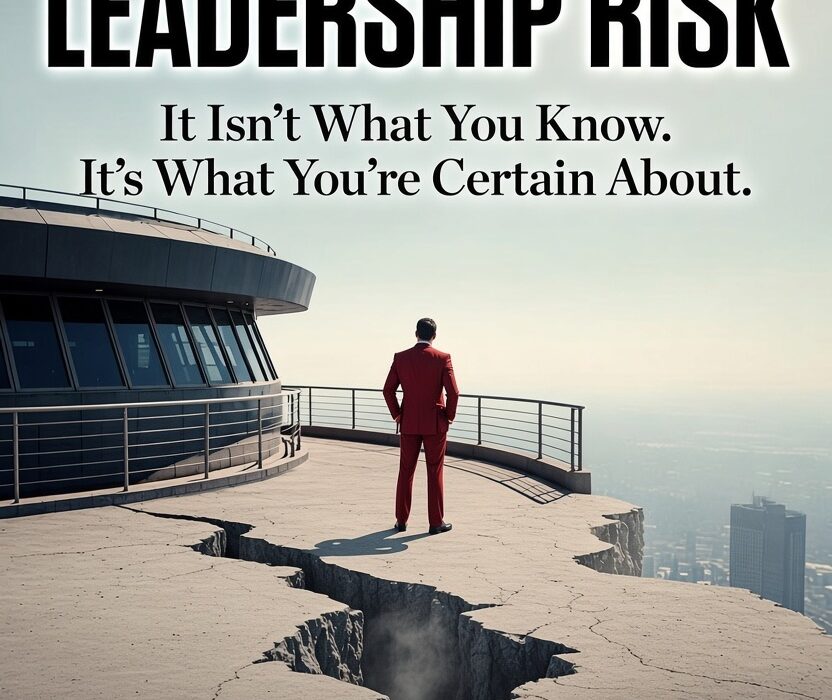
The greatest leadership risk is not incompetence. It is certainty.
The leaders who build enduring organizations are those who challenge assumptions, identify hidden vulnerabilities, adapt continuously, and remain curious long after they become successful. This article explores five questions that follow from that argument, weaving together validated leadership principles, real-world examples, and actionable frameworks to create a fully implementable action plan for leaders navigating the complex landscape of 2026 and beyond.
When Ruthless Leadership Creates Excellence—and When It Destroys Everything
The Ruthless Leadership Spectrum: Where High Standards Become Organizational Risk
Ruthless leadership—characterized by unyielding standards, radical candor, transactional relationships, and zero tolerance for mediocrity—is often romanticized during hyper-growth or turnaround phases. However, its long-term viability depends heavily on context and execution.
text
┌──────────────────────────────────────────────┐
│ RUTHLESS LEADERSHIP SPECTRUM │
└──────────────────────┬───────────────────────┘
│
┌───────────────────────┴───────────────────────┐
▼ ▼
┌──────────────────────────┐ ┌──────────────────────────┐
│ TACTICAL SUCCESS │ │ ORGANIZATIONAL COLLAPSE │
│ (High Standards & │ │ (Fear, Blind Spots & │
│ Clear Direction) │ │ Single Failure) │
└────────────┬─────────────┘ └────────────┬─────────────┘
│ │
- Clear standards & speed • Zero psychological safety
- High bar for quality • Key-talent burnout
- Focus on core outcomes • Blindness to market shifts
Why Fear-Based Leadership Sometimes Works Better Than Collaboration
History shows that highly demanding leadership can be effective under specific circumstances:
During Crisis or Turnaround
When an organization faces existential threats, speed often matters more than consensus. Decisions must be rapid, standards non-negotiable, and accountability absolute. Examples include:
- Steve Jobs’ return to Apple in 1997 — cutting bureaucracy, dropping failing product lines, and rallying resources around singular survival goals
- Alan Mulally’s restructuring of Ford — imposing radical transparency and ruthless prioritization to avoid bankruptcy
- Elon Musk during early manufacturing bottlenecks at Tesla and SpaceX — using uncompromising focus to push through seemingly impossible production challenges
In high-stakes, capital-intensive, or rapidly declining environments, decisive and uncompromising leadership can drive focus and eliminate operational inertia.
When Excellence Is Non-Negotiable
Elite organizations often require extraordinary discipline. Airlines, healthcare institutions, military units, Formula One teams, and space programs cannot tolerate mediocrity. In these environments, leaders must enforce standards relentlessly.
What Miranda Priestly Gets Right About Leadership (And Why It Eventually Backfires)
Miranda Priestly from The Devil Wears Prada embodies this archetype. Her leadership delivers results through:
- Uncompromising Standards: Her infamous quote—”I standardize high expectations. If they fail to meet them, it’s their problem, not mine”—encapsulates an unwavering commitment to quality.
- Strategic Vision and Systems Thinking: Her legendary “cerulean sweater” monologue demonstrates mastery of strategic influence—understanding how micro-level decisions at the top dictate macro-level realities across a global supply chain. She breaks down how a choice made in an executive boardroom dictates what a consumer buys off a discount rack years later, proving her mastery of strategic influence.
- Radical Accountability over Victimhood: When Nigel tells Andy Sachs, “You are not trying. You are whining,” it highlights a vital corporate truth: high-performing cultures require agency and accountability over complaint.
Corporate Turnarounds and Execution Success
Jack Welch’s brutal “rank and yank” system at GE is the textbook example—for two decades it produced extraordinary shareholder returns, because GE’s businesses were mature, its metrics were legible, and the market rewarded relentless cost and quality discipline. Similarly, Steve Jobs’ famously exacting, sometimes cruel standards at Apple produced products with a coherence that consensus-driven design rarely achieves.
The Hidden Cost of Fear: How Powerful Leaders Create Their Own Downfall
The same approach becomes dangerous when the environment gets ambiguous, fast-moving, or dependent on trust rather than control.
Erosion of Psychological Safety
Fear silences critical feedback. When bad news is punished, lower-level managers hide operational flaws, leading to catastrophic surprises. Amy Edmondson’s research at Harvard Business School demonstrates that high-performing teams require psychological safety—an environment where team members can take risks and admit mistakes without fear of humiliation.
- Boeing 737 MAX crisis — a fear-driven culture prevented early identification of software flaws
- Theranos collapse — command-and-control culture punished the dissent that would have caught the fraud earlier
- Nokia’s pre-iPhone silence — leadership experienced little internal pushback not because there was no dissent, but because a fear-driven culture had trained employees not to voice it
Talent Burnout and Attrition
Transactional leaders view employees as disposable units of production. Over time, high performers leave for environments offering psychological safety and clear purpose, leaving behind yes-men and disengaged conformists.
- Uber under Travis Kalanick — optimized ruthlessly for growth and speed, and that same culture produced the scandals, regulatory battles, and executive exodus that eventually forced him out
- GE post-Welch — a system built for control didn’t know how to handle ambiguity, struggling for years after he left
Strategic Blindness
In The Devil Wears Prada 2 (2026), Miranda Priestly’s legacy print empire faces insolvency because her fear-based, top-down model failed to adapt to digital shifts. She finds herself dependent on her former subordinate, Emily Charlton, who mastered the new luxury digital ecosystem. Unyielding leaders often mistake past success for a guaranteed future, making them vulnerable to market disruption.
Ethics Become Negotiable
The original Devil Wears Prada illustrates this perfectly. Miranda repeatedly sacrifices relationships and loyalty to maintain power. She famously betrays Nigel, her loyal art director, to save her own corporate seat. While she preserves her position, she damages trust. Eventually, people become committed to the organization only as long as it serves their interests.
Ruthless leadership can create performance.
Only trusted leadership creates sustainability.
The future belongs not to leaders who inspire fear but to leaders who inspire commitment.
Ruthless leadership is a high-performance engine with almost no shock absorbers. It succeeds when the road is straight. It fails, often catastrophically, the moment the organization needs adaptability, whistleblowing, or trust rather than obedience—precisely the moment Miranda finds herself in twenty years later, dependent on the goodwill of people she once burned.
Leading the First Generation That Refuses to Follow Blindly -Bridging the Generational Divide – Leading Gen Z and Gen Alpha
Why Traditional Leadership Is Losing Its Grip on Gen Z and Gen Alpha
Gen Z (born 1997-2012) and Gen Alpha (born 2013-present) represent the first truly digital-native generations. They have grown up with more information, more transparency about employers (via Glassdoor, LinkedIn, and social media), and less economic security than any generation before them.
Command-and-control leadership assumes information asymmetry—the leader knows more than the team, and compliance is the price of access to that knowledge. That asymmetry has largely evaporated.
What Future Talent Wants That Most Leaders Still Don’t Understand -What Gen Z and Gen Alpha Actually Need From Leadership
Many organizations are attempting to lead tomorrow’s workforce using yesterday’s leadership models. That approach is increasingly ineffective.
Gen Z and Gen Alpha:
- Reject hierarchical command-and-control
- Prioritize authenticity over authority
- Value well-being over relentless hustle
- Seek purpose over pure advancement
- Desire collaboration over control
- Expect psychological safety over fear
They do not reject authority. They reject authority without purpose.
The Five Leadership Traits That Will Matter More Than IQ in the AI Age
text
┌───────────────────────────────────────────────────────────────────────────┐
│ FUTURE-PROOF LEADERSHIP │
├──────────────────────────────┬────────────────────────────────────────────┤
│ 1. Purpose-Centered │ Connects daily operational tasks directly │
│ Leadership │ to measurable, real-world impact. │
├──────────────────────────────┼────────────────────────────────────────────┤
│ 2. Empathy & Psychological │ Encourages open discourse; turns mistakes │
│ Safety │ into learning opportunities. │
├──────────────────────────────┼────────────────────────────────────────────┤
│ 3. Coaching Leadership │ Replaces the manager as controller with │
│ │ the manager as coach who asks better │
│ │ questions rather than provides answers. │
├──────────────────────────────┼────────────────────────────────────────────┤
│ 4. Adaptive & Distributed │ Replaces rigid hierarchies with fluid, │
│ Decision-Making │ cross-functional autonomy. │
├──────────────────────────────┼────────────────────────────────────────────┤
│ 5. Inclusive & Learning │ Innovation emerges when diverse perspectives│
│ Leadership │ are heard; cultures where learning never │
│ │ stops become competitive advantages. │
└──────────────────────────────┴────────────────────────────────────────────┘
People Don’t Want Jobs Anymore—They Want Meaning
Employees increasingly seek meaning, not merely employment. Leaders must connect daily work with larger organizational impact. Gen Z employees consistently rank mission clarity above compensation in engagement surveys; leaders have to be able to answer “why does this matter” as fluently as “what do I want done.”
Younger generations reject superficial corporate marketing (“purpose-washing”). They expect leaders to demonstrate clear alignment between corporate strategy and ESG (Environmental, Social, and Governance) impact.
Empathy & Psychological Safety
Amy Edmondson’s research demonstrates that psychological safety—an environment where team members can take risks and admit mistakes without fear of humiliation—is essential for high-performing teams. The ability to say “I don’t know” or “this plan has a flaw” without career risk is what allows an organization to catch its own blind spots before the market does.
Coaching Leadership
The manager as controller is fading. The manager as coach is rising. Future leaders ask better questions rather than provide all the answers. This requires what Harvard’s Ronald Heifetz calls “adaptive leadership”—the ability to navigate complex challenges without predetermined solutions.
Adaptive & Distributed Decision-Making
Emerging workforces thrive in flatter, highly collaborative networks rather than rigid corporate ladders. Leaders must move away from micromanagement and toward framing challenges clearly, providing necessary tools, and trusting teams to execute.
Inclusive & Learning Leadership
Innovation emerges when diverse perspectives are heard. The ability to harness differences becomes a competitive advantage. The half-life of knowledge continues shrinking—leaders must create cultures where learning never stops.
| Era | Power Source |
| Industrial Age | Position = Power |
| Knowledge Age | Credibility = Power |
| AI Age | Adaptability = Power |
Practical Implementation for Gen Z and Gen Alpha Engagement
From Performance Theatre to Psychological Safety:
- Model vulnerability by admitting uncertainty publicly
- Reward speaking up about problems, not just solving them
- Create structured feedback loops that don’t punish honesty
From Hierarchy to Visible Growth Paths:
- Mentorship, skill-building, and honest feedback loops are retention tools, not perks
- Because loyalty to institutions has weakened, loyalty to development must substitute for it
- Provide clear developmental pathways and regular coaching conversations
From Authority to Purpose:
- Articulate the “why” behind every major initiative
- Connect daily tasks to organizational mission
- Demonstrate authenticity through consistent values-aligned action
From Control to Trust:
- Delegate meaningful decision-making authority
- Focus on outcomes rather than processes
- Build cross-functional collaboration structures
From Rigidity to Adaptability:
- Embrace agile methodologies
- Create rapid experimentation and learning cycles
- Celebrate intelligent failure and learning from mistakes
None of this means abandoning standards. It means decoupling high standards from fear—precisely the distinction Miranda never makes, and precisely why her authority collapses once the industry stops needing her more than she needs it.
What Is Your Company’s Hormuz? The Hidden Dependency That Can Stop Everything
The Invisible Chokepoint Most CEOs Cannot Identify
The Strait of Hormuz is one of the world’s most critical maritime chokepoints; a bottleneck there can disrupt global energy markets overnight. Similarly, every business operation has its own “Hormuz”—a critical single point of failure that, if disrupted, can stall the entire enterprise.
Every organization has one. Many leaders simply do not know where it is.
text
THE ORGANIZATIONAL HORMUZ
INPUT SIDE OUTPUT SIDE
┌──────────────┐ ┌──────────────┐
│ Suppliers │ │ Customers │
│ Raw Material │\ /│ Market Share │
│ Talent │ \ / │ Revenue │
│ Logistics │───► [ THE HIDDEN CHOKEPOINT / HORMUZ ] ───► │ Operations │
│ Technology │ / (Legacy Tech, Single-Source Vendor, \ │ Reputation │
│ Key Expertise│/ Key Person Dependency, etc.) \│ Value │
└──────────────┘ └──────────────┘
Seven Organizational Risks Hiding in Plain Sight
Single Customer Dependency
One customer generates 40–60% of revenue. Losing them creates immediate instability. The automotive industry’s dependence on Chinese consumers exemplifies this—as EV adoption accelerated and domestic Chinese competitors emerged, Western automakers found themselves vulnerable.
Key-Person Dependency (Institutional Knowledge Concentration)
Relying on a small group of veteran engineers, legacy coders, or star performers without documented processes creates systemic risk. One expert knows everything. Nobody else can replace them.
Single-Source Tech & Data Infrastructure
Over-reliance on an un-backed third-party API, a legacy ERP system, or a sole cloud provider without redundancies exposes the company to operational paralysis. In July 2024, a single flawed software update from cybersecurity vendor CrowdStrike grounded airlines, froze hospital systems, and knocked banks offline worldwide—a single point of technology dependency that most affected organizations had never stress-tested.
Supplier & Raw Material Bottlenecks
Focusing purely on low unit costs can lead to concentrated supply chains. If a primary manufacturer or shipping route fails, operations halt entirely. The 2021 Suez Canal blockage, when one container ship ran aground, held up an estimated tens of billions of dollars in global trade through a chokepoint everyone knew existed but few companies had built contingency plans around.
Leadership Dependency
The organization functions only because a few leaders carry disproportionate responsibility. When they leave, performance collapses. The “Great Resignation” revealed that many organizations had built unsustainable reliance on a few key employees. When those employees left, institutional knowledge disappeared.
Reputation Dependency
A brand relies heavily on trust. One crisis can destroy decades of goodwill. The Cambridge Analytica scandal demonstrated how quickly reputation can erode when leaders ignore their dependency on user trust.
Regulatory and Intellectual Property Single Points
Basing core revenue streams on a single patent, regulatory exemption, or tax loophole leaves the business vulnerable to policy changes.
Proactive Bottleneck Auditing
Leaders must regularly audit their value streams by mapping input variables against output requirements. Identifying single points of failure before a crisis hits is essential for long-term operational resilience.
The Leadership Question:
Ask yourself: “If this disappeared tomorrow, what would stop functioning?”
Your answer reveals your organizational Hormuz. Great leaders identify dependencies before they become crises.
Real-World Examples of Hormuz Failures
Boeing’s 737 MAX Crisis: Traced back partly to a single supplier and a single software system that almost no executive outside the engineering team had scrutinized closely. The failure wasn’t ignorance that dependencies existed—it was the assumption that someone else was monitoring the one that mattered.
Kodak: Leadership understood digital photography technically—Kodak invented an early digital camera—but assumed customers and the market would keep valuing film. The assumption, not the technology gap, sank the company.
Blockbuster: Leadership had direct knowledge of Netflix’s mail-order model years before streaming existed and dismissed it as a niche threat, extrapolating from familiarity rather than testing the assumption directly.
The Leadership Imperative: Addressing Hidden Dependencies
- Conduct Dependency Audits:Identify all critical suppliers, customers, and operational chokepoints. Map dependencies and their potential points of failure.
- Build Redundancy:Create backup systems for critical dependencies. This isn’t inefficient—it’s insurance against catastrophic failure.
- Monitor Leading Indicators:Don’t wait for crises. Monitor indicators like supplier financial health, customer concentration changes, and emerging technologies that could disrupt your model.
- Develop Internal Capabilities:Reduce dependency on external expertise by building internal capabilities. This requires investment in talent development, not just hiring.
- Create Early Warning Systems:Establish processes to identify emerging dependencies and vulnerabilities before they become critical.
- Document Institutional Knowledge:Implement knowledge management systems that capture expertise and processes, reducing key-person dependency.
- Scenario Planning:Regularly stress-test your organization against worst-case scenarios involving your Hormuz chokepoints.
Most leadership teams can name their top three growth priorities in seconds. Very few can name their single point of failure with the same fluency—and that asymmetry is itself the risk.
The Dangerous Leadership Assumptions That Quietly Destroy Performance
Why Smart Leaders Make Surprisingly Bad Decisions
Most organizational mistakes begin as assumptions disguised as facts. Leaders rarely fail because they lack information. They fail because they stop questioning what they believe to be true.
The ten assumptions that quietly destroy sales performance are, at root, ten forms of the same mistake: mistaking a signal for a conclusion.
Interest is mistaken for intent. A conversation is mistaken for commitment. A single stakeholder is mistaken for the whole buying committee. Silence is read as calm rather than as a warning sign. Familiarity with a past deal is mistaken for understanding a new one.
10 Deadly Leadership Assumptions That Cost Organizations Millions
┌───────────────────────────────────┬─────────────────────────────────────────────────┐
│ DEADLY ASSUMPTION │ OPERATIONAL REALITY │
├───────────────────────────────────┼─────────────────────────────────────────────────┤
│ 1. Interest Means Intent │ Engagement is not commitment. Without urgent │
│ │ business impact, interest leads nowhere. │
│ │ Buyers spend only 17% of their journey with │
│ │ sellers; showing up and having dialogue isn’t │
│ │ commitment. │
├───────────────────────────────────┼─────────────────────────────────────────────────┤
│ 2. Budget Exists │ Budget follows priority. If the pain is severe │
│ │ enough, funds will be allocated. Budget is the │
│ │ top reason deals are lost. Budget reflects │
│ │ priority. If the problem isn’t urgent, funding │
│ │ won’t appear. │
├───────────────────────────────────┼─────────────────────────────────────────────────┤
│ 3. Talking to the Decision Maker │ Modern B2B deals involve 6–10 stakeholders. │
│ │ Single-point selling is a vulnerability. If you │
│ │ don’t understand how decisions are made and the │
│ │ people involved, you’re relying on someone who │
│ │ can’t say yes. │
├───────────────────────────────────┼─────────────────────────────────────────────────┤
│ 4. They Understand the Value │ Value exists only when the customer articulates │
│ │ the outcome in their own words. Explaining value │
│ │ isn’t the same as them creating it. Top │
│ │ salespeople discuss outcomes and implications, │
│ │ not features and benefits. │
├───────────────────────────────────┼─────────────────────────────────────────────────┤
│ 5. Silence Is Neutral │ Silence indicates lost momentum and a lack of │
│ │ established urgency. When urgency is real, │
│ │ communication doesn’t stall. More often, it │
│ │ means urgency was never fully established. │
├───────────────────────────────────┼─────────────────────────────────────────────────┤
│ 6. They’re Fully Honest │ Buyers hide root causes until deep trust is │
│ │ established. Buyers don’t share everything │
│ │ early. Trust drives truth. Without it, you’re │
│ │ solving surface problems while the root cause │
│ │ remains unaddressed. │
├───────────────────────────────────┼─────────────────────────────────────────────────┤
│ 7. Education Creates Urgency │ Information doesn’t move buyers; personal and │
│ │ business consequences do. Buyers are already │
│ │ informed, doing 70% of their research before │
│ │ speaking with a salesperson. Being the subject │
│ │ matter expert doesn’t drive sales. Personal, │
│ │ customer, and company impact does. │
├───────────────────────────────────┼─────────────────────────────────────────────────┤
│ 8. Objections Mean Resistance │ Objections signal engagement; silence signals │
│ │ disinterest. When buyers push back, they’re │
│ │ still in the conversation. When they go quiet, │
│ │ they’re not. │
├───────────────────────────────────┼─────────────────────────────────────────────────┤
│ 9. I Know What They Need │ Assuming stops active listening and hides unique │
│ │ organizational pressures. Familiar deals create │
│ │ blind spots. Every buyer has different pressures,│
│ │ politics, and needs. The moment you assume, │
│ │ you stop listening and asking questions. │
├───────────────────────────────────┼─────────────────────────────────────────────────┤
│ 10. They’re Aligned Internally │ Buyers struggle with internal consensus; un- │
│ │ bridged divisions stall deals. Even interested │
│ │ buyers struggle to build internal consensus. │
│ │ Deals stall when alignment hasn’t happened │
│ │ behind the scenes. │
└───────────────────────────────────┴─────────────────────────────────────────────────┘
How Industry Giants Lost Everything by Believing the Wrong Things
“Our customers understand our value.”
Kodak’s leadership understood digital photography technically—Kodak invented an early digital camera—but assumed customers and the market would keep valuing film. The assumption, not the technology gap, sank the company.
“We’re talking to the real decision-makers.”
Enterprise sales teams and policy teams alike routinely negotiate with the visible stakeholder while the actual veto sits with someone unseen. Large B2B deals now typically involve six to ten stakeholders, and treating any one of them as sufficient is a structural, not a tactical, error.
“Silence means things are fine.”
Nokia’s leadership famously experienced little internal pushback in the years before the iPhone launch—not because there was no dissent, but because a fear-driven culture had trained employees not to voice it. Silence was mistaken for consensus.
“We already know what the market needs.”
Blockbuster’s leadership had direct knowledge of Netflix’s mail-order model years before streaming existed and dismissed it as a niche threat, extrapolating from familiarity rather than testing the assumption directly.
“Education creates urgency.”
Many companies invested in climate change education and sustainability training without seeing meaningful behavioral change. The employees who needed to act already understood the science—they lacked incentives and organizational support to change behavior.
“Experience equals understanding.”
Samsung’s early smartphone strategy assumed they knew what consumers needed based on their feature phone experience. They offered features consumers didn’t want and missed the simplicity that iPhone users valued.
Three Questions That Prevent Million-Dollar Leadership Mistakes
To eliminate bias and prevent resources from being wasted on unviable deals or projects, leaders should regularly apply three diagnostic questions:
- What am I assuming that I haven’t directly confirmed?
- What concrete facts support my current view?
- What alternative explanation could be true?
These questions have saved organizations billions of dollars.
The sales research corrective scales up cleanly: before a decision, a leader should be able to answer what they’re assuming but haven’t confirmed, what facts actually support their read of the situation, and what else could plausibly be true.
That habit—treating your own conclusions as hypotheses rather than facts—is the organizational immune system against exactly the kind of assumption that killed Kodak, Nokia, and Blockbuster.
Stop assuming and start assessing.
Why Curiosity Is Becoming the Ultimate Leadership Superpower -Moving Beyond the Peter Principle
Competence Gets You Promoted. Curiosity Keeps You Relevant.
Competence gets people promoted. Curiosity keeps them growing.
This distinction is one of the most important lessons in leadership development.
The Peter Principle describes what happens when an organization promotes competence without checking for curiosity: employees rise until they reach a role that rewards a different skill than the one that got them there, and then plateau—or actively hurt performance—because the instinct that made them excellent at the previous level (relying on known, tangible skills) becomes a liability at the next one, which rewards exactly the opposite instinct: comfort with not-knowing.
The Leadership Difference Between Knowing and Learning
Competence is the ability to be effective and efficient in a unique situation. This could include core, leadership, or functional competencies. It’s an observable and tangible quality that is vital to performance and job satisfaction.
Curiosity can be defined as a penchant for seeking new experiences, knowledge, and feedback and an openness to change. In the work environment, cultivating organization-wide curiosity helps leaders and their employees adapt to uncertain market conditions and external pressures.
The most enduring metaphor for curiosity is cognitive appetite. Both appetite and curiosity are powerful drives that share similar underlying mechanisms. Appetite is the desire for food with the aim of reducing the physiological discomfort of hunger, while curiosity is a desire for information in order to reduce the psychological discomfort of uncertainty.
The Science of Curiosity: Four Traits Shared by Exceptional Leaders
Research by Kashdan et al (2020) identified four dimensions of workplace curiosity that predict significant outcomes such as work engagement, innovation, job crafting, and job satisfaction:
┌───────────────────────────────────────────────────────────────────────────┐
│ THE FOUR DIMENSIONS OF WORKPLACE CURIOSITY │
├──────────────────────────────┬────────────────────────────────────────────┤
│ 1. Joyous Exploration │ The passion for seeking out new knowledge, │
│ │ emerging trends, and alternative business │
│ │ models. The pleasure of discovering new │
│ │ ideas and perspectives. │
├──────────────────────────────┼────────────────────────────────────────────┤
│ 2. Deprivation Sensitivity │ The drive to solve complex problems, │
│ │ bridge knowledge gaps, and resolve │
│ │ operational uncertainties. The discomfort │
│ │ of not knowing and the motivation to │
│ │ resolve it. │
├──────────────────────────────┼────────────────────────────────────────────┤
│ 3. Stress Tolerance │ The ability to embrace ambiguity, accept │
│ │ failure as a learning opportunity, and │
│ │ pivot when assumptions are proven wrong. │
│ │ The capacity to remain curious even in │
│ │ challenging situations. │
├──────────────────────────────┼────────────────────────────────────────────┤
│ 4. Openness to People’s Ideas│ Active, humble engagement with diverse │
│ │ perspectives, cross-functional teams, and │
│ │ non-traditional solutions. Genuine │
│ │ interest in others’ perspectives. │
└──────────────────────────────┴────────────────────────────────────────────┘
Workplace curiosity outperformed the trait of mindfulness in predicting work engagement, innovation, job crafting, and job satisfaction.
Specific vs. Diversive Curiosity
According to psychologist D.E. Berlyne, curiosity operates in two distinct modes:
Diversive Curiosity: Broad exploration across different fields and domains. This increases exposure to new ideas and helps leaders spot macro trends before they disrupt the industry. It is aimed at increasing uncertainty.
Specific Curiosity: Deep investigation into a targeted problem. This reduces uncertainty and helps leaders resolve complex operational challenges. It serves to decrease uncertainty.
Are You Curious—or Just Afraid of Missing Out?
A critical distinction for ambitious leaders is differentiating between genuine curiosity and FOMO (Fear of Missing Out).
FOMO is ego-centered, shallow, and reactive—a desire to be part of something without genuine interest in the substance. It leads to superficial engagement, constant checking, and the illusion of contribution without real involvement. While curiosity is the desire to learn something new and expand your overall understanding of the world, FOMO is narrowly-focused, ego-centred. When one’s behavior is influenced by FOMO, one may not really be interested in an event at all, but would still feign curiosity just “to be a part of” of something.
Genuine Curiosity is a drive to understand, a desire to close information gaps, a pleasure in discovery. It leads to deep engagement, meaningful contributions, and the capacity to innovate.
Ambitious leaders often mistake FOMO for curiosity—they want to be seen as engaged, but they’re not truly interested. This leads to the appearance of leadership without the substance.
The Silent Career Killer Nobody Warns High Performers About
Many successful professionals become victims of their own expertise. They rely on what worked before. They stop exploring. They stop questioning. They stop learning. Eventually, the environment changes faster than they do.
This is often how highly competent professionals encounter the Peter Principle.
Consider this scenario: Shekhar displays great competency as a technology recruiter, and is promoted to the next role as a Team Leader. In this position, he displays great competencies as a people manager and is further promoted to the next role in the hierarchy. As time passes, he is promoted to a senior role for which he is not trained or prepared for—meaning that he would be more productive for the company if he had not been promoted—rendering him to be incompetent.
Most junior employees rely on facts and tangible skills to progress to the next stage in their career, whereas successful leaders rely on their curiosity to innovate new solutions and level-up the game. But, many-a-times, as you grow, you rely on your competence and learned subject matter expertise instead of going left of field to discover something new.
The Competency vs. Curiosity Curve
THE COMPETENCY VS. CURIOSITY CURVE
Skill / Impact
▲
│ / Curiosity-Driven Growth
│ / (Continuous Adaptation)
│ /
│ /
│ Competency Baseline /
│ ──────────────────────────────┼──────────────────────────────
│ / Peter Principle Plateau
│ / (Relying solely on past skills)
│ /
└────────────────────────────┴──────────────────────────────► Career Lifecycle
While domain competence (technical and functional mastery) secures early career advancement, relying on it exclusively creates a ceiling. As leaders move higher, yesterday’s expertise can turn into tomorrow’s blind spot. Curiosity serves as the primary catalyst to break through this plateau.
Why Every Great Leadership Skill Begins with Curiosity
Curiosity acts as a powerful foundation, boosting the effects of nearly every other competency one might bring to the workplace. Consider the relationship between curiosity and leadership competencies:
- As a leadership fundamental, listening without comprehension is worthless. The mechanics of asking questions, nodding and saying “oh okay” lack heart without curiosity.
- Only a spirit of inquiry with genuine interest will unleash an outpouring of information from which the curious leader is able to benefit.
- The only way to improve business acumen and be truly competent—across horizontal and vertical promotions—is by being curious, asking questions, and pushing yourself forward.
When an employee’s curiosity is triggered, they think more deeply and rationally about decisions and tend to come up with more creative and innovative solutions. It is this deep and rational thinking that makes curiosity a gateway to further competency.
Mitigating Organizational Curiosity Inhibitors
According to Dr. Diane Hamilton’s Curiosity Code Index, organizations must actively identify and remove four primary blockers of workplace curiosity:
┌───────────────────────────────────────────────────────────────────────────┐
│ The Four Forces That Quietly Kill Curiosity at Work │
├─────────────────┬─────────────────────────────────────────────────────────┤
│ 1. Fear │ Fear of failure, embarrassment, or losing control. │
│ │ This is the most powerful inhibitor of curiosity. │
├─────────────────┼─────────────────────────────────────────────────────────┤
│ 2. Assumptions │ Unquestioned beliefs (“We’ve always done it this way”) │
│ │ Lack of interest, laziness, lack of necessity. │
├─────────────────┼─────────────────────────────────────────────────────────┤
│ 3. Technology │ Passive over-reliance on automated outputs without │
│ │ questioning underlying logic. Technology solving │
│ │ issues for them, lack of exposure to technology, and │
│ │ too much information to process. │
├─────────────────┼─────────────────────────────────────────────────────────┤
│ 4. Environment │ Rigid corporate structures that reward conformity over │
│ │ creative inquiry. Impact of educators, work │
│ │ relationships, and family, peers, and friends. │
└─────────────────┴─────────────────────────────────────────────────────────┘
9 Evidence-Based Ways to Become a More Curious and Influential Leader
- Practice Active Inquiry
Great leaders don’t just ask questions—they practice active inquiry that demonstrates genuine interest:
- Ask open-ended questions without predetermined answers
- Listen to understand, not to respond
- Follow up on unexpected answers
- Be comfortable with not knowing
- Challenge Your Assumptions
Leaders must actively challenge their own assumptions:
- Seek contrary evidence
- Invite dissenting perspectives
- Reframe problems from different angles
- Test hypotheses rather than confirming beliefs
- Create Curiosity-Supporting Environments
Individual curiosity isn’t enough—leaders must create environments that support curiosity:
- Reward questions, not just answers
- Celebrate learning from failure
- Encourage exploration without immediate ROI
- Protect time for thinking and discovery
- Balance Competence and Curiosity
Ambitious leaders must actively manage the competence-curiosity balance:
- Deliberately enter unfamiliar domains
- Seek perspectives that challenge expertise
- Maintain beginner’s mindset even in expert domains
- Teach others to reinforce learning
- Distinguish FOMO from Curiosity
Leaders must consciously examine their motivations:
- Am I genuinely interested in this, or just afraid of missing out?
- Would I pursue this if no one else knew about it?
- What do I hope to learn, not just experience?
- How does this connect to my larger purpose?
- Learn Beyond Your Function
- Finance leaders should understand customers
- HR leaders should understand operations
- Operations leaders should understand technology
- Seek Contradictory Opinions
Growth begins where agreement ends. Actively seek out perspectives that challenge your own. - Reward Experimentation
Innovation requires psychological safety. Create a culture where intelligent failure is celebrated as learning. - Stay Curious After Success
Success often kills curiosity. The best leaders remain students throughout their careers.
The Leadership Growth Blueprint: From Expert to Visionary Leader
The journey from ambitious professional to great leader follows a clear path:
- Build Competence:First, develop deep expertise through study, practice, and experience. This provides the foundation for credibility and effective contribution.
- Recognize Competence’s Limits:Understand that expertise in one domain doesn’t translate to others. Acknowledge that no matter how much you know, there’s always more to learn.
- Cultivate Curiosity:Actively develop curiosity through the practices above. Make inquiry and learning explicit priorities.
- Apply Curiosity to Leadership:Use curiosity to understand people (not just problems), contexts (not just data), and possibilities (not just constraints).
- Create Curious Organizations:Build cultures where curiosity is valued, rewarded, and practiced at all levels.
- Evolve Continuously:As the organization and world change, maintain the curiosity that enabled initial success.
Examples of Curiosity-Led Leadership
Satya Nadella at Microsoft: When Nadella became CEO, he moved the culture from “know-it-all” to “learn-it-all.” His willingness to embrace curiosity and humility transformed Microsoft’s culture and performance, creating an environment where innovation flourished.
Mary Barra at General Motors: Barra brought deep industry expertise but also remarkable curiosity about emerging technologies. Her willingness to learn about electric vehicles, autonomous driving
Conclusion: The Leadership Question That Changes Everything
Imagine waking up tomorrow and discovering that the one assumption your organization has never questioned is wrong.
The customer you believed would never leave has left.
The technology you trusted has failed.
The market you dominated has shifted.
The employee everyone depended upon has resigned.
The leadership style that built your success no longer works.
Would your organization adapt—or unravel?
History suggests that most failures do not begin with incompetence.
They begin with certainty.
The certainty that yesterday’s success guarantees tomorrow’s relevance.
The certainty that experience equals understanding.
The certainty that silence means agreement.
The certainty that people, markets, technologies, and competitors will behave as they always have.
The organizations that endure are not necessarily the smartest.
They are the most curious.
They question assumptions before circumstances force them to.
They identify hidden dependencies before they become crises.
They encourage dissent before blind spots become disasters.
They replace fear with trust, control with adaptability, and certainty with continuous learning.
The greatest leaders understand something profoundly simple:
Competence may get you to the top.
Curiosity is what keeps you there.
And perhaps that is the deepest lesson hidden inside Miranda Priestly’s world, inside every organizational Hormuz, inside every failed assumption, and inside every leadership journey.
The future rarely belongs to those who know the most.
It belongs to those who never stop learning.
So before you close this article, ask yourself one final question:
What am I absolutely certain about today that I should become curious about tomorrow?
The answer may determine the future of your leadership, your team, and your organization.
Subhashis Banerji [Author]
Leadership assessor, strategist, and writer. I help professionals and organizations make smarter decisions by learning to read patterns, not promises.
📘 Read all my articles here:
👉 https://successunlimited-mantra.net/ & https://successunlimited-mantra.com/index.php/blog PLUS on https://relationshipandhappiness.com/
💼 Connect with me on LinkedIn: https://www.linkedin.com/in/subhashis-banerji-21b1418/
Related posts:
- The Ultimate Problem-Solving Blueprint: Integrating Blue Sky Thinking, Blue Ocean Strategy, Design Thinking, Systems Thinking & Lateral Thinking for Business, Career and Personal Success
- How to Beat Competitors Without Attacking Them: The Psychology of Becoming the Obvious Choice
- How Average Employees Become Toxic Leaders: The Hidden Link Between Insecurity, Power and Office Politics
- When Feedback Becomes a Threat: How Leaders Can Transform Toxic Feedback into Growth, Motivation and High Performance


– Please read our Comment Policy