

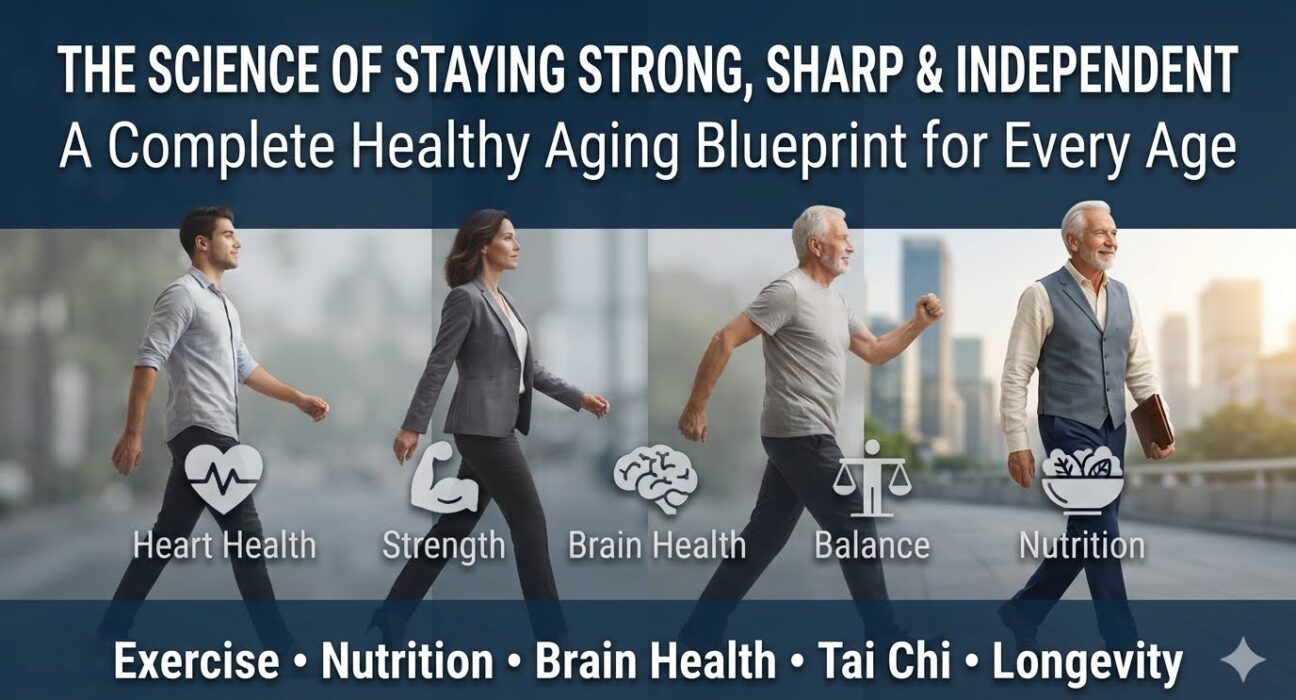
The Complete Healthy Aging Blueprint: Science-Backed Exercise, Nutrition, Tai Chi and Longevity Strategies for Every Age
Reading Time: 39 minutes
Contents
hide
1
The Complete Healthy Aging Blueprint: Science-Backed Exercise, Nutrition, Tai Chi and Longevity Strategies for Every Age
1.8
PART 7: Tai Chi for Executives: A Complete, Step-by-Step Beginner’s Guide (Including a 5-Minute Office Routine) – The Ancient Practice Modern Science Keeps Validating
1.14
PART 13: 65+: The 5 Strength Exercises That Preserve Independence
The Complete Healthy Aging Blueprint: Science-Backed Exercise, Nutrition, Tai Chi and Longevity Strategies for Every Age
INTRODUCTION: Why Science Says Aging Doesn’t Have to Mean Decline – Why High Performers Burn Out — And the Longevity Blueprint That Fixes It
Most people assume that aging automatically means weaker muscles, slower thinking, reduced energy, poor mobility, weight gain, and a gradual decline in independence. Modern science tells a very different story.
Research from Harvard Health, Mayo Clinic, Johns Hopkins Medicine, the National Institutes of Health (NIH), the NHS (UK), and studies published in The Lancet consistently show that many of the changes we associate with aging are driven less by age itself and more by inactivity, poor nutrition, chronic stress, inadequate sleep, and the gradual loss of muscle mass.
The remarkable news is that the human body retains an extraordinary ability to adapt, rebuild, and strengthen itself throughout life. People in their 60s, 70s, 80s, and even 90s can improve strength, mobility, balance, cardiovascular fitness, cognitive function, and overall quality of life when they follow the right combination of movement, nutrition, recovery, and lifestyle habits.
This comprehensive guide brings together the most validated scientific evidence on exercise, nutrition, healthy aging, longevity, muscle preservation, fat loss, brain health, mobility, balance training, and Tai Chi into one practical roadmap. Whether you are a young adult building a strong foundation, a midlife professional seeking peak performance, or a senior aiming to remain active, independent, and mentally sharp, this guide will help you create a sustainable blueprint for lifelong health.
Because the real goal is not merely to live longer—it is to live stronger, healthier, sharper, and more independently for as many years as possible.
PART 1: The 4 Biomarkers That Predict Your Lifespan Better Than Your Annual Check-Up
This chapter explains the key biomarkers of healthy aging and why maintaining them is critical for a long and productive career, particularly for those in high-stakes roles. Research from Mayo Clinic, Harvard Health, and The Lancet Healthy Longevity has identified specific, measurable indicators that predict not just lifespan, but “healthspan”—the number of years you live in good health.
VO₂ Max: The #1 Predictor of How Long (and How Well) You’ll Live
VO₂ max is the maximum amount of oxygen your body can utilize during intense exercise. It is one of the strongest predictors of lifespan and cognitive resilience. For leaders, a high VO₂ max translates directly to better stamina, reduced fatigue, and a greater capacity to handle prolonged periods of stress. A decline in VO₂ max is an early warning system for future cardiovascular issues.
Key Insight: For every 1 mL/kg/min increase in VO₂ max, there is a significant reduction in the risk of mortality. Research published in The Lancet has shown that improving cardiorespiratory fitness by just 1 MET (metabolic equivalent) is associated with a 15% reduction in mortality risk.
How to Improve: Regular aerobic exercise—walking, cycling, swimming, or jogging—at a moderate to vigorous intensity. The interval walking protocol (described later) is particularly effective.
Grip Strength: The 10-Second Test That Forecasts Healthy Aging
Often called a “biomarker of aging,” grip strength is a simple but powerful measure of overall muscle function, frailty, and even brain health. For a leader, grip strength correlates with vitality and independence. A strong handshake signals more than just confidence; it is a proxy for robust physical reserve.
Research published in The Lancet has shown that grip strength is a stronger predictor of cardiovascular mortality than systolic blood pressure. It is also associated with cognitive decline, with weaker grip strength linked to a higher risk of dementia.
How to Improve: Resistance training that targets the hands, forearms, and overall upper body. Simple exercises like farmer’s carries, wrist curls, and deadlifts can all improve grip strength.
Walking Speed: The Hidden Vital Sign Doctors Watch in Older Adults
Your walking speed is a strong indicator of mobility, balance, and overall physical function. A slower gait is associated with a higher risk of falls, hospitalization, and cognitive decline. For an executive, this represents the foundational mobility required for aging with dignity and independence.
Research from the NIH and Johns Hopkins has shown that walking speed is a reliable predictor of survival in older adults. A gait speed of less than 0.8 meters per second (about 1.8 mph) is associated with increased mortality risk.
How to Improve: Regular walking practice, with a focus on brisk walking. Balance exercises and strength training for the legs also contribute to maintaining walking speed.
Why Muscle Is Now Called “The Organ of Longevity”
Often described as the “organ of longevity,” muscle is metabolically active tissue that protects against age-related weight gain, improves insulin sensitivity, and supports bone health. Sarcopenia (the loss of muscle mass and strength) is a major driver of frailty. For high-performers, preserving muscle is about preserving the physical capacity to lead.
Muscle acts as a reservoir of amino acids that can be mobilized during illness or stress. It also plays a critical role in glucose metabolism, with more muscle mass associated with better blood sugar control.
How to Improve: Consistent resistance training, combined with adequate protein intake. For older adults, the European Society for Clinical Nutrition and Metabolism (ESPEN) recommends 1.0–1.2 g of protein per kg of body weight per day, rising to 1.2–1.5 g for those with acute or chronic illness.
The Executive Insight: These biomarkers are not just for older adults. They are the leading indicators of a healthy, productive future. Investing in strategies to preserve and improve them is the single most impactful investment you can make for your career and your life.
PART 2: Safety First: Essential Health Checks Before Starting
Regardless of age, a small amount of preparation prevents the vast majority of exercise-related injuries and health scares.
When to Get Medical Clearance
Speak with your doctor before starting a new exercise program or a new eating pattern (such as time-restricted eating) if any of the following apply:
- You are new to vigorous exercise and are over 40 (men) or 50 (women), or have two or more cardiovascular risk factors (smoking, high blood pressure, high cholesterol, diabetes, family history of early heart disease).
- You have a diagnosed heart, lung, kidney, liver, or metabolic condition (including diabetes or thyroid disease).
- You have osteoporosis, significant arthritis, a recent fracture, joint replacement, or recent surgery.
- You are pregnant, post-partum, or breastfeeding.
- You take medication for blood pressure, blood sugar, or blood thinning — these can interact with exercise intensity and with meal timing changes.
- You have a history of disordered eating — structured fasting or time-restricted eating is not appropriate for you without specialist supervision.
Warm Up, Cool Down, Listen to Your Body
- Warm up for 5–10 minutes with light activity (slow walking, gentle arm circles) before anything strenuous — this raises muscle temperature and reduces injury risk.
- Stretch after exercise, when muscles are warm, holding each stretch 15–30 seconds without bouncing, breathing normally throughout.
- Exercise should feel like effort, not pain. A sharp, sudden, or joint-specific pain is a signal to stop — not to push through.
- Never hold your breath during strength exercises; exhale on the exertion phase (e.g., as you push up or stand up) and inhale on the release.
Stop and Seek Emergency Care Immediately If You Experience
- Chest pain, pressure, tightness, or discomfort, especially if it spreads to the arm (particularly the left), neck, jaw, or back.
- Severe or unexpected shortness of breath.
- Dizziness, light-headedness, or fainting.
- A racing, fluttering, or irregular heartbeat that doesn’t settle.
- Sudden numbness or weakness, especially on one side of the body.
If chest discomfort or these warning signs come and go over time rather than resolving, that pattern still warrants a prompt visit to your doctor — recurring symptoms should always be medically evaluated rather than managed indefinitely through exercise or diet changes alone.
Age Is Not a Barrier
Public records document 65-year-olds still cycling competitively, 70-somethings training in martial arts, and individuals well into their 80s, 90s, and beyond taking up gymnastics, bodybuilding, marathon running, and even skydiving for the first time. The physiological capacity to build strength and endurance persists throughout life — what changes with age is the need for a more careful warm-up, closer attention to joints, and — for anyone starting from a long period of inactivity — a slower, more gradual ramp-up.
PART 3: The 5 Science-Backed Pillars of Lifelong Fitness
Every well-rounded program — at any age — combines five types of movement. The emphasis shifts across the lifespan, but none should be dropped entirely.
Pillar 1: Aerobic (Cardiovascular) Exercise
Walking, cycling, swimming, dancing — raises heart rate, protects the heart and lungs, supports healthy weight and mood. Aerobic exercise has been shown to increase the size of the hippocampus, the brain region involved in verbal memory and learning, directly countering age-related brain atrophy.
Pillar 2: Muscular Strength
Bodyweight, resistance bands, dumbbells, machines — builds and preserves muscle and bone, the single most protective factor against age-related frailty. Resistance training improves executive functions like working memory, cognitive flexibility, and self-regulation, the bedrock of strategic leadership.
Pillar 3: Flexibility / Mobility
Stretching, yoga — keeps joints moving through their full range and reduces stiffness and injury risk. Mobility is the ability to move a joint through its full range with control, while flexibility is the ability of a muscle to lengthen passively.
Pillar 4: Balance
Single-leg stands, heel-to-toe walking, Tai Chi — becomes increasingly important after age 50 for fall prevention. Tai Chi has been shown to reduce fall rates by up to 50% in older adults.
Pillar 5: Mind–Body / Restorative
Tai Chi, gentle yoga, breathing practice — lowers stress hormones, supports sleep, and improves coordination and body awareness. Chronic stress management is a core competency of leadership, protecting the nervous system from constant overactivation.
Recommended Weekly Targets by Life Stage
| Life Stage | Aerobic Activity | Strength Training | Balance / Flexibility |
| Young Adults (18–39) | 150–300 min/week moderate, or 75–150 min/week vigorous | 2–4 sessions/week, all major muscle groups | 2–3 sessions/week mobility work |
| Midlife Adults (40–64) | 150–300 min/week moderate | 2–3 sessions/week, prioritizing compound movements | 3+ sessions/week; begin adding balance work |
| Older Adults (65+) | At least 150 min/week moderate (or as ability allows) | At least 2 sessions/week, all major muscle groups | Balance training most days; Tai Chi or similar 2–3×/week |
Source: synthesized from CDC Physical Activity Guidelines for Americans, WHO global recommendations, and NIA guidance for older adults.
PART 4: The Exercise-Brain Connection: How Movement Sharpens Executive Function
This chapter focuses on optimizing the brain, the most important organ for any leader. It highlights the neurological benefits of exercise and sleep, supported by research from the NIH, Harvard Health, and Johns Hopkins.
How Cardio Physically Grows the Brain Region That Controls Memory
Aerobic exercise has been shown to increase the size of the hippocampus, the brain region involved in verbal memory and learning. This is a direct countermeasure to age-related brain atrophy associated with Alzheimer’s disease. Research from the University of Pittsburgh found that just 12 months of aerobic exercise increased hippocampal volume by 2% in older adults, effectively reversing age-related loss by 1–2 years.
The Executive Insight: A single workout can improve cognitive function for up to two hours. Regular aerobic exercise is the most powerful tool available for protecting your brain’s performance over a long career.
Resistance Training and Executive Function
Lifting weights isn’t just about building muscles; it also improves executive functions like working memory, cognitive flexibility, and self-regulation. These functions are the bedrock of strategic leadership. Research from the University of British Columbia showed that resistance training improved cognitive function in older women with mild cognitive impairment.
The Executive Insight: Strength training is brain training. The discipline, focus, and neural recruitment required to lift weights translates directly to improved mental performance.
Tai Chi: The “Dual-Task” Training the Military and Neuroscientists Are Studying
The balance, coordination, and focus required in Tai Chi may help preserve cognitive function by supporting neuroplasticity and reducing stress. Research from the University of South Florida found that Tai Chi improved cognitive performance in older adults with mild cognitive impairment, with effects comparable to conventional exercise.
The Executive Insight: Tai Chi is a unique “dual-task” training—it challenges both the body and the mind simultaneously, building cognitive reserve.
Walking and Dementia Risk Reduction
Regular walking, particularly brisk walking, is linked to a significantly lower risk of cognitive decline and dementia. It supports brain health by improving blood flow, reducing inflammation, and promoting neurogenesis. A study of over 70,000 adults found that those who walked more than 30 minutes daily had a 25% lower risk of dementia.
The Executive Insight: Walking is the most accessible, low-risk brain-protective activity available. A 30-minute walk is an investment in your cognitive future.
Sleep and Memory Consolidation
Deep, restorative sleep is when the brain consolidates memories and clears out metabolic waste. For a professional, skimping on sleep is sacrificing the quality of your decision-making and your ability to learn and adapt. Research from Harvard Medical School shows that sleep deprivation impairs the ability to form new memories and significantly compromises cognitive performance.
The Executive Insight: Mental sharpness is the currency of a leader. Sleep is not a luxury to be sacrificed for work; it is an investment in cognitive capital that pays immediate dividends in clarity and creativity.
PART 5: Sleep Optimization: The Missing Pillar Every Fitness Plan Ignores
This chapter treats sleep as a high-performance strategy, detailing why it is the non-negotiable foundation of cognitive and physical health. Research from the NIH, Johns Hopkins, and Harvard Health has identified sleep as one of the most critical, yet most neglected, components of a healthy lifestyle.
The 7–9 Hour Imperative
The consensus among sleep experts is that most adults need 7–9 hours of sleep per night. This is not a suggestion; it is the biological requirement for optimal function. The National Sleep Foundation reports that adults who get less than 7 hours of sleep are at increased risk for obesity, diabetes, cardiovascular disease, and cognitive impairment.
The Executive Insight: Treating sleep as a “nice-to-have” is a strategic error. Chronic sleep deprivation impairs judgment, creativity, and emotional regulation—all essential leadership skills.
Deep Sleep and Muscle Recovery
Deep sleep is the critical phase for physical recovery, muscle repair, and the release of growth hormone, which is essential for maintaining muscle mass and strength. This is why professional athletes prioritize sleep as much as training. Research from Stanford University found that increasing sleep in basketball players improved their speed and shooting accuracy.
The Executive Insight: If you are strength training but not sleeping adequately, you are leaving significant recovery and performance gains on the table.
Sleep and Weight Loss
Poor sleep disrupts the hormones that regulate appetite—ghrelin increases, and leptin decreases—leading to increased hunger and a tendency to crave high-calorie foods. Research from the University of Chicago found that sleep-deprived individuals consumed significantly more calories the next day, particularly from fat-rich foods.
The Executive Insight: Sleep is a critical component of weight management. You cannot out-exercise a poor sleep habit.
Sleep and Immunity
Consistent, high-quality sleep is essential for a robust immune system. Sleep deprivation makes you more susceptible to infections and increases systemic inflammation. Research from the NIH has shown that sleep helps regulate the production of cytokines, proteins essential for immune response.
The Executive Insight: For the busy executive, sleep is the first line of defense against illness. It takes just one missed night of sleep to significantly reduce your immune function.
The Executive Sleep Protocol
Based on guidance from the NIH, Johns Hopkins, and Harvard Health:
- Morning Sunlight:Get 10–20 minutes of natural sunlight in your eyes (not looking directly at the sun) within 30 minutes of waking. This sets your internal clock and improves sleep quality.
- Evening Screen Reduction:Minimize blue light exposure from screens 1–2 hours before bed. Blue light suppresses melatonin production, delaying sleep onset.
- Bedroom Temperature:Keep your bedroom cool (around 65°F / 18°C) to facilitate the natural drop in core body temperature necessary for deep sleep.
- Consistent Schedule:Go to bed and wake up at the same time every day, even on weekends. A consistent rhythm is more important than total hours for circadian health.
- Wind-Down Ritual:Create a 15–30 minute pre-bed routine—reading, gentle stretching, meditation—to signal your nervous system that it’s time to rest.
PART 6: How Chronic Stress Quietly Sabotages Leadership Performance -THE SCIENCE OF STRESS MANAGEMENT
This chapter addresses the unique stress challenges faced by leaders and provides proven strategies for mitigation. Research from Harvard, Cleveland Clinic, and the NIH has established stress management as a critical component of long-term health and cognitive function.
The Cortisol Connection
Cortisol is the body’s primary stress hormone. While essential for survival, chronic elevation from unmanaged stress wreaks havoc on the body. It promotes visceral fat storage, increases inflammation, impairs cognitive function, and accelerates cellular aging. Research from the University of California, San Francisco, has linked chronic stress to telomere shortening—the biological equivalent of accelerated aging.
The Executive Insight: Managing cortisol is not a “soft” priority; it’s a core biological requirement for sustainable high performance.
Breathing Exercises
Simple techniques like 4-7-8 breathing (inhale for 4 seconds, hold for 7, exhale for 8) can quickly activate the parasympathetic nervous system, lowering heart rate and blood pressure. Research from Harvard Medical School has shown that regular breathing practice can reduce symptoms of anxiety and improve focus.
The Executive Insight: You can do this anywhere—in a meeting, in traffic, before a presentation. It’s the most accessible stress-reduction tool available.
Meditation and Mindfulness
Even 5–10 minutes of daily meditation can significantly reduce cortisol levels, improve focus, and build resilience against stress. Research from Johns Hopkins found that mindfulness meditation programs had moderate evidence of improving anxiety, depression, and pain.
The Executive Insight: Meditation is not about clearing your mind; it’s about training your attention. This skill directly translates to improved focus and decision-making.
Nature Walks
Spending time in nature has been shown to lower cortisol levels and improve mood. A walking meeting outdoors is a powerful way to combine exercise and stress reduction. Research from the University of Michigan found that just 20 minutes in nature significantly reduced stress hormone levels.
The Executive Insight: Combine leadership development with stress management—take your one-on-one meetings outside.
Gratitude Practices
Actively cultivating gratitude by journaling or reflecting on positive aspects of your life has been linked to improved mental well-being and reduced inflammation. Research from the University of California, Davis, showed that gratitude practices improved sleep quality and reduced depression symptoms.
The Executive Insight: A 5-minute gratitude journal before bed is one of the most effective, low-cost interventions for improving mental health and resilience.
Social Connection
Prioritizing relationships with family and friends is a buffer against stress. The Harvard Study of Adult Development—one of the longest-running studies of adult life—identified relationship quality as the single strongest predictor of late-life health and happiness.
The Executive Insight: Social fitness is as important as physical fitness. Loneliness increases mortality risk comparable to smoking 15 cigarettes a day.
PART 7: Tai Chi for Executives: A Complete, Step-by-Step Beginner’s Guide (Including a 5-Minute Office Routine) – The Ancient Practice Modern Science Keeps Validating
Tai Chi is widely described by physicians as “meditation in motion”: a series of slow, continuous, low-impact movements coordinated with breathing and gentle mental focus. Originating centuries ago in China as an internal martial art, it was later distilled into simplified public-health forms — most famously a 24-movement sequence developed in the mid-20th century — specifically so that people of any age or fitness level could learn it safely. It remains one of the most extensively studied mind-body practices in the medical literature.
What the Evidence Shows
Research reviewed by the NIH’s National Center for Complementary and Integrative Health, Harvard Health, and Johns Hopkins Medicine consistently associates regular Tai Chi practice with:
- Improved balance and a reduced rate of falls in older adults — one of the best-supported benefits in the literature, with some studies showing a 50% reduction in fall risk.
- Modest reductions in blood pressure, comparable to some pharmaceutical interventions.
- Reduced pain and improved function in knee osteoarthritis.
- Better flexibility, leg strength, and general mobility.
- Reduced stress, anxiety, and improved mood and sleep quality.
- Potential benefit for balance and quality of life in people with Parkinson’s disease, though it is not a treatment for the underlying condition.
The Core Principles
Every Tai Chi movement, regardless of style, is built on the same handful of principles:
- Relaxed, upright posture — spine long, shoulders down and soft, chin gently tucked, weight balanced evenly through the feet at rest.
- Continuous, unhurried movement — there is no pause between moves; one flows into the next like a slow-moving river.
- Weight shifting (“full and empty”) — at almost every moment, more of your weight rests on one leg (“full”) while the other is lighter (“empty”); consciously feeling this shift is central to balance training.
- Breath coordinated with movement — generally inhaling as the arms rise or draw in, exhaling as they lower or extend outward.
- Soft joints — knees and elbows stay very slightly bent, never locked straight.
- Mind leads movement — attention rests on the sensation of the movement itself rather than on getting the shape “correct,” which is what produces the calming, meditative effect.
Getting Ready to Practice
- Wear loose, comfortable clothing that doesn’t restrict movement.
- Wear flat, supportive shoes with good grip (or practice barefoot on a non-slip surface).
- Choose a flat, clutter-free space with enough room to stretch your arms fully in every direction.
- Keep a sturdy chair nearby for balance support during single-leg movements, especially when starting out.
- Allow 15–20 minutes of uninterrupted time.
A Complete Step-by-Step Beginner Routine
The eight movements below form a simple, complete practice sequence that takes roughly 12–15 minutes at a slow, mindful pace. Practice them in order; each one flows into the next.
1. Preparation Stance (Wu Chi) and Breathing
Stand with feet shoulder-width apart, knees soft (very slightly bent), arms relaxed at your sides.
Let your weight settle evenly through both feet. Lengthen the crown of your head gently upward.
Take 5–8 slow breaths, feeling your feet connect to the floor and your body settle.
Cue: This stance is the calm starting and ending point of the whole practice — return to it whenever you like.
2. Commencing Form
Inhaling, slowly raise both arms forward and up to shoulder height, palms facing down, elbows softly bent.
Exhaling, gently bend your knees as you lower your arms back down in front of you to your sides.
Repeat this rise-and-fall 5 times, letting the breath lead the movement.
Cue: Move as if your arms are floating on water — no sudden lifts or drops.
3. Parting the Wild Horse’s Mane
Shift your weight onto your right leg, turning your torso slightly right, holding an imaginary ball with the right hand on top, left hand below.
Step out to the left with your left foot, shifting your weight forward onto it as your left arm sweeps up and out to shoulder height (as if parting a curtain), while your right hand presses gently down and back.
Shift weight back, turn to gather an imaginary ball on the other side, and repeat stepping out to the right.
Alternate sides, 3–4 repetitions per side.
Cue: The sweeping arm and the forward weight shift happen together, at the same unhurried speed.
4. Wave Hands Like Clouds
Standing with knees soft, shift your weight fully onto one leg.
Rotate your torso gently from side to side at the waist, letting both hands trace slow, circular “cloud” shapes in front of your body at chest height, one hand rising as the other falls.
With each rotation, step one foot sideways to the other, gradually traveling a short distance sideways.
Continue for 6–8 slow rotations, then reverse direction.
Cue: Let the rotation come from your waist and hips, not just your arms.
5. Brush Knee and Twist Step
Shift weight onto your back leg, drawing one hand up beside your ear, palm facing forward, while the opposite hand circles down in front of your body.
Step forward with the opposite foot, shifting weight onto it as the lower hand “brushes” past the outside of your knee and the upper hand presses forward at shoulder height.
Return to center, switch sides, and repeat, alternating forward steps 3–4 times per side.
Cue: Keep your torso upright as you step — avoid leaning forward over the front knee.
6. Grasp the Sparrow’s Tail (Simplified)
Ward Off: shift weight onto your front leg with a rounded arm held in front of your chest, as if leaning gently against a large ball.
Roll Back: shift weight back, turning your torso slightly, both hands drawing down and back.
Press: shift forward again, bringing both palms forward together at chest height.
Push: draw hands back to your chest, then press both palms forward and slightly down, shifting weight fully into the front leg.
Repeat the four-part sequence 2–3 times, then switch the lead leg.
Cue: This is the most complex movement here — it’s fine to slow down further or repeat just the Ward Off and Push parts while learning.
7. Golden Rooster Stands on One Leg
Stand near a chair for support if needed. Shift your weight fully onto one leg.
Slowly raise the opposite knee toward hip height, toes pointed down, while the same-side arm rises gently in front of you to shoulder height, palm up.
Hold for a few breaths, focusing your eyes on a fixed point ahead to help balance.
Lower with control and repeat on the other side.
Cue: This is a balance-training movement — even lifting the knee a few inches counts; height is not the goal.
8. Closing Form
Bring your feet back to shoulder-width, weight even on both legs.
Inhaling, raise both arms out and up in a wide, slow circle; exhaling, lower them back down to your sides.
Repeat 3 times, then stand quietly in the Wu Chi stance from Step 1 for a few final breaths before finishing.
Cue: This closing sequence signals to your nervous system that the practice is complete, helping consolidate the calming effect.
Common Beginner Mistakes
- Locked Knees: Locking the knees restricts circulation and causes instability. Keep them soft and slightly bent.
- Looking Down: Looking down breaks the posture and alignment of the spine. Keep the gaze forward.
- Moving Too Fast: Tai Chi is meant to be slow and continuous. Moving too fast defeats the purpose of building body awareness and practicing control.
- Holding Breath: The breath should be deep and natural, coordinated with the movement.
- Overreaching: The movements should be within a comfortable range of motion. Overreaching compromises form and can strain muscles and joints.
The 5-Minute Desk Reset: Office Tai Chi for Between Meetings
This sequence can be performed discreetly in an office, at a desk, or in a conference room to reset focus and relieve tension.
- Seated Posture Reset:Sit at the edge of your chair, feet flat. Sit tall, imagine a string pulling the top of your head to the ceiling. Place your hands on your thighs, palms down. Take 3 slow, deep breaths.
- Seated Cloud Hands:Keeping your back straight, gently rotate your torso from side to side. Let your arms hang loosely and swing as you turn. Breathe naturally. Continue for 1 minute.
- Seated Neck and Shoulder Stretch:Inhale, raising your shoulders towards your ears. Exhale, letting them drop heavily. Repeat 3 times. Gently turn your head to look over each shoulder, holding for 2 breaths.
- Seated Cat-Cow:Place your hands on your knees. Inhale, arch your back and look up (Cow). Exhale, round your back and drop your chin to your chest (Cat). Repeat 5 times.
- Final Grounding:Place both feet flat. Place one hand on your heart and one on your belly. Take 3 slow, deep breaths. Feel the calm and focus restored.
Practice Plan and Modifications
- Frequency: Aim for 3–5 sessions of 15–20 minutes per week; measurable balance and mobility benefits are typically reported in research after 8–12 weeks of consistent practice.
- Seated Tai Chi: Every movement above can be adapted seated in a sturdy, armless chair — perform the same weight shifts (shifting slightly side to side or forward/back in the chair) and arm movements while keeping the feet grounded.
- Standing balance support: Hold the back of a chair with one hand during Golden Rooster Stands on One Leg until confidence builds.
- Water Tai Chi: The same sequence performed standing in chest- or waist-deep water adds gentle resistance and extra balance support.
Safety Notes
- Never lock the knees straight — keep them softly bent throughout.
- Only move through a pain-free range of motion; balance movements should feel gently challenging, not precarious.
- Stop and rest if you feel dizzy or unsteady; sit down if needed.
- If you have significant balance impairment, a recent fall, or a neurological condition, learn your first sessions with a qualified instructor or physiotherapist present.
PART 8: Balance Training: The Overlooked Fitness Pillar That Prevents Falls and Injuries
The CDC estimates that roughly 1 in 4 older adults falls each year, and falls are the leading cause of both fatal and non-fatal injury in this age group — yet balance is highly trainable at any age.
Simple Balance Exercises
- Single-leg stance: Hold the back of a chair, lift one foot slightly off the floor, hold for 10–30 seconds, switch sides. Progress by reducing hand support over time.
- Heel-to-toe walk: Walk in a straight line placing the heel of one foot directly in front of the toes of the other, arms out for balance.
- Weight shifts: Standing with feet hip-width apart, slowly shift weight from one foot to the other without lifting the feet.
- Standing marching: March in place, lifting knees to hip height if comfortable, near a wall or counter for support.
- Tai Chi: Among the most well-evidenced balance and fall-prevention practices available.
Home Safety Basics
- Keep walkways clear of clutter, loose rugs, and trailing cords.
- Ensure good lighting, especially on stairs and at night (nightlights help).
- Install grab bars in the shower/bath and use non-slip mats.
- Always use stair handrails.
PART 9: Low-Impact, High-Result: The Case for Water-Based Training
Water’s buoyancy supports much of the body’s weight — reducing load on hips, knees, and the spine — while its resistance works muscles in every direction of movement. This makes pool-based exercise an excellent option for anyone with arthritis, joint replacements, balance concerns, or simply a preference for lower-impact training.
Cardio in the Water
- Water walking or jogging: Walk from one pool wall to the other in the shallow end, gradually increasing pace and distance; progress to jogging in deeper water once comfortable.
- Marching in place: Lift knees alternately while pumping opposite arms, standing tall with a straight back.
- Aqua jogging with a flotation belt: Mimics running without impact, ideal for building cardiovascular endurance.
Upper Body
- Water push-ups: Hands on the pool edge, feet on the floor, lean in and push back out.
- Arm raises and biceps curls: Perform slow, controlled arm movements against the water’s resistance; cupped hands or foam webbed gloves increase resistance further.
- Chest fly: Arms extended to the sides underwater, sweep them together in front of the body, then reverse.
Lower Body
- Calf raises: Holding the pool edge if needed, rise onto toes and lower slowly.
- Leg lifts (front/back and side to side): Holding the wall or rail, swing one leg at a time with control, then switch sides.
- Hamstring curls: Bend one knee to bring the heel toward the glutes, then lower.
- Flutter kicks: Holding the pool edge, face-up, kick with straight legs in small controlled movements for 15–30 seconds.
Core and Balance
- Wall chair: Back against the wall, hands gripping the edge behind you, lift the knees toward the chest and hold briefly.
- Seated balance on a pool noodle: Sit balanced on a noodle and gently move the legs to propel around the pool — builds core strength and balance together.
- Water Tai Chi: Performing slow Tai Chi movements while standing in water adds gentle resistance and is particularly effective for balance and stress reduction.
- Pool planks: Hold a pool noodle with both hands, press down into the water, and lean forward until the body forms a straight line — a joint-friendly plank alternative.
Modify or stop any exercise that causes pain, and always check in with your physician before starting a new pool routine.
PART 10: Walking as Medicine: The Free, Science-Backed Longevity Habit
Walking is the most accessible exercise there is, and the science on how to walk more effectively is genuinely useful. A large analysis of walking habits (drawing on data from several hundred thousand adults in the UK) found that a lifetime of brisk walking was associated with a meaningfully lower biological age than a lifetime of slow walking — and that even a modest change, such as adding a 10-minute brisk walk to an inactive routine, was linked to a small gain in life expectancy.
Practical Tips
- Start where you are: Even 5–10 minutes of easy walking is a legitimate starting point; add 5 minutes every week or two.
- Use the “talk test”: At a brisk pace you should be able to talk but not sing comfortably.
- Bad weather is not a reason to stop — an indoor shopping mall or a covered walkway works just as well.
- On stairs, always use the handrail, especially when starting a new routine or returning after time off.
- Consider a simple heart-rate monitor or fitness tracker to stay within a comfortable, sustainable effort zone rather than overexerting.
The Interval Walking Protocol
As introduced in Section 4.2, alternating 3 minutes brisk / 3 minutes easy for at least 30 minutes, 4 times a week, produces greater improvements in blood pressure, weight, and leg strength than the same total time spent walking at one constant pace. This protocol scales to any fitness level — “brisk” simply means noticeably harder than your “easy” pace, whatever that currently is.
PART 11: Your 20s and 30s: Building the Foundation for a 50-Year Career
Bone density peaks in the late 20s to early 30s, and this is genuinely the best window to build a reserve of muscle and bone that pays off for decades. It is also, paradoxically, the life stage where people most often skip strength work in favor of cardio alone.
The Basic Framework
- Strength train 3–4 times per week using compound, multi-joint movements (squats, deadlift-pattern hip hinges, rows, push-ups/bench press) — these recruit more muscle per exercise than isolation moves like biceps curls.
- Add 2–3 cardio sessions per week — a mix of steady-state (30+ minutes) and, once a base fitness level is established, short intervals.
- Don’t neglect mobility — desk-bound lifestyles tighten hip flexors and chest muscles; 10 minutes of stretching after workouts prevents this from becoming a long-term posture problem.
Japanese Interval Walking
If you already walk regularly, a well-studied modification developed by exercise physiologists at Shinshu University in Japan can meaningfully increase the benefit without adding time. The method, sometimes popularized as “Japanese walking,” combines two separate findings from exercise science:
- Varying your pace burns more energy per distance covered than walking at one constant speed, because starting and accelerating repeatedly makes the body work harder relative to the ground covered.
- Walking briskly (roughly 3–4 mph, fast enough that talking is possible but singing is not) is associated with meaningfully better long-term health markers than walking slowly, even over the same total time.
The protocol: Alternate 3 minutes of brisk, higher-intensity walking with 3 minutes of slower, easy-paced walking, repeated for at least 30 minutes, at least 4 days a week. Trials comparing this interval approach with continuous moderate walking have found larger reductions in blood pressure and body weight, and greater improvements in leg strength, in the interval group. Anyone can try it — including seniors — simply by adjusting what “brisk” and “easy” mean for their own fitness level.
PART 12: 40–64: How to Stay Sharp, Strong, and Lean Through Your Peak Earning Years -MIDLIFE ADULTS (40–64) — MAINTAINING MOMENTUM
Muscle mass and strength begin a gradual, accelerating decline from around the 30s onward if activity levels drop — a process called sarcopenia. The encouraging finding across decades of research is that this decline is driven far more by inactivity than by age itself, and it is substantially reversible at any point once resistance training is resumed.
Priorities for This Decade
- Keep strength training non-negotiable — 2–3 sessions a week is the minimum to meaningfully slow muscle and bone loss.
- Women approaching and past menopause face accelerated bone density loss due to falling estrogen; weight-bearing exercise (walking, jogging, strength training) is one of the few modifiable protections, alongside adequate calcium and vitamin D.
- Smaller-framed men and post-menopausal women are at particularly elevated osteoporosis risk and benefit the most from consistent weight-bearing and resistance work.
- Joint-friendly modifications matter more now — swap high-impact moves for their low-impact equivalents (e.g., stationary bike or pool walking instead of running) if joints are sensitive, without abandoning intensity altogether.
A Short Daily Core, Posture, and Conditioning Routine (10–15 Minutes)
This routine is a useful addition for anyone wanting to tighten core and postural muscles alongside their main training. One important, evidence-based caveat first: spot reduction — losing fat from one specific area through localized exercise — is not physiologically possible. Mayo Clinic and Harvard Health both note that ab or core exercises strengthen and tone the underlying muscle, but total-body fat loss (through overall activity plus a modest calorie deficit) is what ultimately reveals that muscle. Treat the routine below as a strengthening and posture tool, not a fat-targeting one.
| Exercise | Reps / Time | Main Benefit |
| Brisk walking (warm-up) | 5–10 min | Raises heart rate, warms muscles |
| Wall or desk push-ups | 10–15 reps | Chest, shoulders, arms |
| Standing knee lifts | 15 each side | Core and hip engagement |
| Chair sit-to-stand | 10 reps | Full-body, leg and glute strength |
| Standing side bends | 15 each side | Obliques and waist mobility |
| Stomach vacuum hold | 5 × 10-second holds | Deep core (transverse abdominis) activation |
| Seated marching | 60–90 sec | Keeps core engaged, light cardio |
| Standing overhead reach stretch | 30 sec | Opens chest, improves posture |
How to do the Stomach Vacuum:
- Stand tall (or sit upright).
- Exhale completely.
- Draw your belly button inward and slightly upward toward your spine.
- Hold for about 10 seconds while continuing to breathe lightly.
- Relax and repeat 5 times.
General Habits That Support Fat Loss (Alongside Exercise):
- Limit added sugar, sweets, and sugar-sweetened drinks.
- Prioritize protein at meals (eggs, fish, poultry, legumes, dairy, tofu/paneer).
- Fill roughly half your plate with vegetables.
- Stop eating around 80% full rather than completely full.
- Drink water consistently through the day.
- Avoid large meals or snacking very late at night.
Consistency beats intensity: doing a moderate routine daily produces better long-term results than one very hard workout once a week.
PART 13: 65+: The 5 Strength Exercises That Preserve Independence
For older adults, the CDC and WHO recommend at least 150 minutes a week of moderate aerobic activity, at least 2 days a week of muscle-strengthening activity covering all major muscle groups, and regular balance training. If a chronic condition prevents meeting this fully, the guidance is simply to be as physically active as ability allows and to avoid prolonged sitting — some activity is always better than none.
Sarcopenia: The Hidden Cause of Frailty and How to Reverse It
Sarcopenia is the age-related loss of muscle mass and strength. It typically begins in the 30s and accelerates each subsequent decade. Crucially, research consistently shows this is largely a consequence of reduced physical activity rather than an unavoidable feature of aging itself — and it responds well to resistance training at any age, including in people starting in their 80s or 90s.
Benefits of consistent strength training for older adults, supported across the literature, include:
- Increased muscle mass and metabolic efficiency
- Improved bone mineral density (helping prevent and manage osteoporosis)
- Reduced joint pain from conditions such as arthritis, by better supporting the joint
- A lower risk of falls and fall-related fractures through improved strength, balance, and gait
- Better blood pressure, cholesterol, and blood sugar regulation
- Measurable improvements in mood, sleep quality, and cognitive function
Five Essential Strength Exercises for Seniors
These compound movements — working multiple joints and muscle groups at once — give the most functional benefit for daily life (standing up, climbing stairs, carrying groceries) per minute invested. Start with bodyweight only; add light resistance bands or 1–2 kg (2–5 lb) dumbbells once the movement feels easy and controlled.
1. Sit-to-Stand (Chair Squat)
- Muscles worked: Glutes, quadriceps, hips, calves, core.
- Difficulty: Easy to Moderate
- How to do it: Sit toward the front of a sturdy, armless chair with feet flat, shoulder-width apart. Lean slightly forward from the hips, keeping your back straight. Press through your feet and stand up fully, squeezing your glutes at the top. Lower back down slowly and with control until you’re seated again. Repeat for 8–12 repetitions.
- Easier variation: Use armrests or push up from the chair seat with your hands for extra support.
- To progress: Once easy, try without using your hands at all, then progress to a full standing squat (hinging hips back as if sitting into a chair, without actually sitting).
2. Chair-Supported Hip Hinge (“Deadlift Pattern”)
- Muscles worked: Glutes, hamstrings, lower back, core.
- Difficulty: Moderate
- How to do it: Stand tall holding the back of a sturdy chair with both hands, feet hip-width apart. Keeping your back flat and knees softly bent, hinge forward at the hips, pushing your hips back as though closing a car door with them. Lower only as far as comfortable while keeping your spine neutral (not rounded). Squeeze your glutes to return to standing. Repeat for 8–10 repetitions.
- Easier variation: Reduce the range of motion, hinging only slightly.
- To progress: Hold light dumbbells or a resistance band anchored under your feet as you hinge.
3. Standing or Seated Row
- Muscles worked: Upper back, shoulders, arms, core — directly counteracts the forward-hunched posture common with age.
- Difficulty: Easy to Moderate
- How to do it: Loop a resistance band around a sturdy anchor (or a doorknob) at chest height, or sit holding both ends of a band under your feet. Hold one end in each hand with arms extended forward. Pull your elbows straight back, squeezing your shoulder blades together. Slowly return to the start. Repeat for 10–12 repetitions.
- Easier variation: Use a lighter band, or do one arm at a time holding a chair with the other hand for balance.
- To progress: Use a heavier-resistance band or add a brief pause at full contraction.
4. Wall or Chair Push-Up
- Muscles worked: Chest, shoulders, triceps, core.
- Difficulty: Easy to Moderate
- How to do it: Stand facing a wall (easier) or place both hands on a sturdy chair seat with feet back (harder), hands slightly wider than shoulder-width. Keeping your body in a straight line, bend your elbows to bring your chest toward the wall or chair. Push back to the starting position. Repeat for 10–15 repetitions.
- Easier variation: Stand closer to the wall to reduce the load.
- To progress: Step feet further from the wall, use the chair version, and eventually progress to a modified push-up on the floor with knees down.
5. Bridge
- Muscles worked: Core, lower back, glutes, hamstrings — supports getting up from bed, the floor, or a low chair.
- Difficulty: Moderate
- How to do it: Lie on your back with knees bent, feet flat on the floor, arms by your sides, palms down. Squeeze your glutes and lift your hips until your knees, hips, and shoulders form a straight line. Hold for 2–3 seconds. Lower back down slowly and with control. Repeat for 8–10 repetitions.
- Easier variation: Lift the hips only partway, or perform seated core bracing instead.
- To progress: Once comfortable, try lifting one leg straight while holding the bridge position (single-leg bridge).
Program Guidelines
- Frequency: At least 2 sessions per week, ideally 3, on non-consecutive days to allow recovery.
- Repetitions and sets: 8–12 repetitions per exercise, 2–3 sets, is a well-supported range for building both strength and muscle size safely in older adults.
- Load: Choose a weight or band resistance that feels challenging by the last few repetitions of a set, without ever training to complete muscular failure.
- Progression: Once a full set feels easy with good form, add a small amount of resistance, a few more repetitions, or an extra set — not all three at once.
- Work both upper and lower body, plus core, in each session for balanced, functional strength.
A Minimalist 3-Exercise Starter Routine
For anyone who feels overwhelmed by a full program, these three moves alone — done consistently — build strength through the whole body:
| Exercise | Reps | Sets | Rest |
| Sit-to-Stand | 10–12 | 2–3 | 60 sec |
| Wall/Chair Push-Up | 10–12 | 2–3 | 60 sec |
| Standing/Seated Row | 10–12 | 2–3 | 60 sec |
Do this every other day. As it becomes easy, add repetitions, then resistance, then a fourth exercise from Section 13.2.
PART 14: The Executive Nutrition Blueprint: What to Eat at Every Career Stage – Evidence-Based Nutrition for Lifelong Health and Longevity
Major health institutions converge on remarkably similar core guidance for what to eat, even when their visual models differ slightly.
Building the Plate
Harvard’s Healthy Eating Plate recommends filling half your plate with vegetables and fruit, one quarter with whole grains, and one quarter with a healthy protein source, using healthy plant oils in moderation and water as the primary drink.
The UK NHS Eatwell Guide similarly recommends: over one-third fruit and vegetables; just over a third starchy carbohydrates (choosing wholegrain where possible); some dairy or dairy alternatives; beans, pulses, fish, eggs, and meat as protein sources; small amounts of unsaturated oils; and 6–8 glasses of fluid a day, while limiting foods high in fat, salt, and sugar.
Both align closely with the Mediterranean-style eating pattern endorsed by the American Heart Association, Mayo Clinic, and Harvard Health: abundant vegetables, fruit, whole grains, legumes, nuts, and olive oil; regular fish; moderate dairy and poultry; and limited red meat and processed food.
Protein Needs Across the Lifespan
General population protein guidelines set a baseline daily intake, but research reviewed by the European Society for Clinical Nutrition and Metabolism (ESPEN) recommends higher targets for older adults to protect against sarcopenia.
| Group | General Guideline |
| Healthy adults (general baseline) | Roughly 0.8–1.0 g protein per kg body weight per day |
| Healthy older adults (65+) | 1.0–1.2 g per kg body weight per day |
| Older adults with acute/chronic illness or malnutrition risk | 1.2–1.5 g per kg body weight per day (under medical/dietitian guidance) |
| Anyone doing regular resistance training | Benefits from the higher end of these ranges, spread across meals |
Good sources across all groups: eggs, fish, poultry, lean meat, dairy, legumes, tofu, and paneer. ESPEN also recommends pairing higher protein intake with regular resistance exercise for the best effect on muscle maintenance.
Key Micronutrients as We Age
- Vitamin D — essential for bone strength, muscle function, and fall prevention; NIH guidance is roughly 600 IU/day for most adults, rising to 800 IU/day for adults over 70. Sources: sunlight exposure (around 10–20 minutes, avoiding peak sun and burning), fortified foods, and supplements if levels are low (confirm with a blood test via your doctor).
- Calcium — vital for bone density; NIH recommends roughly 1,000 mg/day for most adults, rising to 1,200 mg/day for women over 50 and men over 70. Sources: dairy, fortified plant milks, leafy greens, tofu set with calcium.
- Magnesium — supports energy production, nerve and muscle function, and bone health; found in nuts, seeds, whole grains, and leafy greens. Low intake has been linked to reduced muscle mass and strength in older adults.
- Vitamin B12 — absorption declines with age; found in animal products and fortified foods; older adults and those on plant-based diets should discuss screening/supplementation with their doctor.
- Fiber — supports digestion and heart health; aim for 25–38 g/day from vegetables, fruit, whole grains, and legumes.
Hydration
General guidance is roughly 2–3 liters of total fluids a day, more with exercise or heat. Older adults have a blunted thirst sensation and can become dehydrated without feeling thirsty, so regular fluid intake through the day — not just drinking when thirsty — is particularly important in this group.
PART 15: Chrononutrition: Why When You Eat Might Matter More Than What
A growing field called chrononutrition — reviewed extensively in the journal Nutrients and supported by circadian-biology research from institutions including Harvard, NIH, and the University of Murcia (Spain) — shows that meal timing itself, independent of what or how much is eaten, measurably affects metabolism.
The Biological Basis
A master body clock in the brain (the suprachiasmatic nucleus) is set mainly by light exposure, while “peripheral clocks” in the liver, pancreas, and fat tissue are set largely by when you eat. Insulin sensitivity, digestion efficiency, and metabolic rate are all naturally higher earlier in the day and decline toward evening as melatonin (the sleep hormone) rises. Eating when your body is biologically prepared for sleep — late at night — is associated with poorer blood sugar control, more stored fat, and reduced next-day fullness hormones (leptin), compared with identical meals eaten earlier.
Five Evidence-Based Meal-Timing Principles
- Keep a consistent daily eating window, ideally under 12 hours (for example, roughly 8 a.m.–6 p.m.). This time-restricted eating (TRE) pattern has shown benefits for weight, blood pressure, and blood sugar in multiple clinical trials, even without deliberately cutting calories.
- Front-load your calories earlier in the day. Research — including a well-known Spanish weight-loss cohort study that found people eating lunch earlier lost significantly more weight on an identical diet than those eating later — consistently favors a larger breakfast/lunch and a lighter dinner, echoing the traditional saying: “breakfast like a king, lunch like a prince, dinner like a pauper.”
- Avoid eating close to bedtime — aim to finish your evening meal at least 2–3 hours before sleep. Studies of glucose drinks given nearer to bedtime found higher blood sugar and lower insulin response than the same drink given several hours earlier.
- Eat at consistent times each day. Irregular eating schedules (very different meal times on workdays vs. weekends) have been linked to poorer metabolic health, in a manner similar to jet lag disrupting sleep.
- Notice your own chronotype. “Morning” people naturally align well with earlier eating; “evening” people (night owls) tend to eat later and more energy-densely, and may benefit from gradually shifting meals earlier rather than all at once.
Practical Evening Guidance
- If you are hungry in the evening, favor smaller, protein-rich snacks over large meals.
- Foods containing tryptophan (chicken, salmon, tuna, nuts, seeds) in a modest evening meal may support sleep quality.
- Night-shift workers face a harder version of this challenge, since some eating during work hours is unavoidable for energy; where possible, favor lighter, lower-fat choices at night and get natural daylight exposure during off-hours to support the body clock.
Important Caveats
- Time-restricted eating and intermittent fasting are not appropriate for everyone: they are not recommended for anyone who is pregnant or breastfeeding, has (or has a history of) an eating disorder, is underweight, or is a child or adolescent, and require extra caution for anyone on medication for diabetes or blood pressure, since timing changes can affect dosing needs.
- Evidence quality for fasting-style approaches is still developing; the most consistent, higher-confidence finding across the research is simply the value of a regular, front-loaded eating pattern that avoids very late meals — not a requirement for strict fasting windows.
- What and how much you eat still matters as much as when — chrononutrition is a complement to a balanced diet, not a replacement for one.
- Always check with your doctor before adopting a structured fasting or restricted eating-window pattern, particularly if you take medication or manage a chronic condition.
PART 16: The Sustainable Fat-Loss Framework (No Crash Diets Required)
This chapter provides a clear, science-based approach to healthy weight management that fits into a busy lifestyle.
Calorie Deficit Explained
The fundamental principle of fat loss is consuming fewer calories than your body burns. This must be achieved in a safe and sustainable manner, avoiding extreme or restrictive diets. A moderate deficit of 300–500 calories per day is generally recommended for sustainable weight loss of 0.5–1 kg (1–2 lb) per week.
Why “Spot Reduction” is a Myth
You cannot reduce fat from a specific area (e.g., the “belly”) through localized exercise. Fat loss occurs systemically as you reduce your overall body fat percentage. This is a widely confirmed finding from Mayo Clinic, Harvard Health, and the NIH.
Protein and Satiety
A high-protein diet increases satiety (the feeling of fullness), supports muscle mass, and has a higher thermic effect (it takes more energy to digest). This is the cornerstone of a successful fat loss diet. Research has shown that increasing protein intake to 25–30% of calories can reduce daily calorie intake by 200–300 calories.
Walking for Fat Loss
Walking is an incredibly effective and accessible fat-burning activity. It raises the heart rate and burns calories without placing high stress on the joints. The “Japanese walking” interval method is a powerful way to maximize the benefits.
Strength Training During Dieting
When you’re in a calorie deficit, the body can lose muscle mass along with fat. Strength training is the key signal to tell your body to preserve (and even build) muscle during dieting. This is why a combination of walking and strength training is more effective than either alone.
Common Mistakes
Common pitfalls include overly restrictive diets that are unsustainable, failing to track food intake, ignoring protein needs, and under-eating, which actually slows metabolism.
PART 17: Women’s Health at Every Career Stage: Perimenopause, PCOS & Beyond
This chapter addresses the specific health challenges and opportunities for women, supported by research from the NIH, Mayo Clinic, and Harvard Health.
Perimenopause and Menopause
The transition to menopause involves a natural decline in estrogen, which can lead to symptoms like brain fog, mood changes, weight gain, and accelerated bone loss. Research has shown that regular exercise, particularly strength training, can mitigate many of these symptoms.
Key Recommendations:
- Strength training 2–3 times per week to preserve bone density and muscle mass.
- Adequate calcium and vitamin D to support bone health.
- Regular aerobic exercise to support cardiovascular health and mood.
- Mind-body practices like Tai Chi and yoga to manage stress and hot flashes.
Post-Menopausal Strength Training
The loss of estrogen accelerates osteoporosis risk. Regular, consistent strength training is non-negotiable for preserving bone mineral density, maintaining muscle mass, and supporting metabolism in this life stage. Research from the NIH has shown that post-menopausal women who lift weights regularly can slow bone loss and maintain independence.
PCOS (Polycystic Ovary Syndrome)
PCOS is a hormonal disorder common among women of reproductive age that can affect fertility and metabolic health. Exercise and nutrition play a central role in managing it.
Key Recommendations:
- Regular aerobic and strength training to improve insulin sensitivity.
- A balanced, anti-inflammatory diet with adequate protein.
- Stress management to support hormonal balance.
Pregnancy and Postpartum
Maintaining a safe and appropriate exercise regimen during and after pregnancy is crucial for the mother’s well-being and recovery. Strength training and pelvic floor exercises are key components.
Key Recommendations:
- Consult with an obstetrician or physiotherapist before starting or continuing an exercise program.
- Focus on low-impact activities like walking, swimming, and prenatal yoga.
- Prioritize pelvic floor exercises to support recovery.
- Listen to your body and modify activities as needed.
PART 18: Men’s Health After 40: Testosterone, Visceral Fat & Cardiovascular Risk
This chapter addresses the specific health challenges for men, particularly those in high-pressure roles, supported by research from the NIH, Harvard Health, and Cleveland Clinic.
Testosterone Decline
Testosterone levels naturally decline with age, but this can be accelerated by chronic stress, poor sleep, and a sedentary lifestyle. Declining testosterone is associated with reduced energy, decreased muscle mass, increased visceral fat, and lower libido.
Key Recommendations:
- Prioritize strength training, which can naturally support testosterone levels.
- Ensure adequate sleep and stress management.
- Maintain a healthy weight and balanced diet.
Visceral Fat
High levels of visceral fat (fat stored around the organs) are a major health risk for men, increasing the risk of heart disease and metabolic syndrome. This type of fat is responsive to a combination of strength training, a healthy diet, and stress management.
Key Recommendations:
- Combine aerobic and strength training for optimal fat loss.
- Prioritize protein and fiber at meals.
- Manage stress and sleep to regulate cortisol and appetite hormones.
Cardiovascular Risk
Men are at a higher risk for heart disease, which is a leading cause of death. A proactive approach to exercise and stress management is the most effective way to mitigate this risk.
Key Recommendations:
- Regular cardiovascular exercise (150+ minutes per week).
- Strength training to support metabolic health.
- Regular health screenings for blood pressure, cholesterol, and blood sugar.
Strength Training After 50
For men over 50, maintaining functional strength is essential for preserving independence, preventing injuries, and maintaining the physical capacity to perform at a high level. A focus on compound movements and recovery becomes paramount.
Key Recommendations:
- Focus on compound movements (squats, deadlifts, rows, presses).
- Prioritize form over weight to prevent injury.
- Allow adequate recovery between sessions.
PART 19: Social Fitness: Why Loneliness Is as Deadly as Smoking (And What to Do About It)
Research increasingly shows that loneliness and social isolation are significant mortality risks, comparable to smoking 15 cigarettes a day. This chapter highlights the profound impact of social connection on health and longevity, supported by the Harvard Study of Adult Development and research from the NIH.
Loneliness Increases Mortality Risk
The health impact of chronic loneliness and social isolation is comparable to that of smoking or obesity. It increases stress hormones, inflammation, and the risk of cardiovascular disease and cognitive decline.
Key Insight: The Harvard Study of Adult Development, one of the longest-running studies of adult life, identified relationship quality as the single strongest predictor of late-life health and happiness.
Community Improves Health Outcomes
Being part of a community, whether through a walking group, a fitness class, or a social club, provides accountability and support, increasing the likelihood of maintaining healthy habits.
Key Insight: People who have strong social connections are 50% more likely to survive a major health event.
Walking Groups Improve Adherence
Walking in a group makes the activity more enjoyable and increases adherence, as you are less likely to skip a workout when you have a social commitment.
The Executive Insight: Building and maintaining a strong social network is a protective factor for both mental and physical health. It is also a key enabler of building the strong, supportive relationships that are the foundation of a successful life.
PART 20: How to Actually Stick With It: Motivation Science for Busy Executives
- Consistency beats intensity — a moderate routine followed every day for months outperforms a single very hard workout followed by long breaks.
- Start smaller than you think you need to; it is far easier to progress from an easy, sustained habit than to recover from early burnout or injury.
- Choose activities you genuinely enjoy — dancing, cycling, martial arts, gardening, and group fitness classes all count and tend to be sustained longer than routines chosen purely for their efficiency.
- Track your progress simply (a notebook or app) — visible progress, even small, is one of the strongest predictors of sticking with a new habit.
- Training with a partner, class, or community adds accountability and enjoyment, particularly for balance- and mind-body practices like Tai Chi.
- If you have trained before and stopped, your body regains strength and skill faster the second time thanks to “muscle memory” — it is never too late to restart.
Common Barriers and Solutions
| Barrier | Solution |
| “I have no motivation” | Seek support from family/friends; find an exercise buddy |
| “I don’t have time” | Do 10-minute bursts; spread activity throughout day |
| “I can’t afford a gym” | Walk outdoors; use bodyweight exercises; free apps |
| “I’m too old” | Research proves you can build strength at any age! |
| “I might hurt myself” | Start slowly; learn proper form; consult a professional |
Setting Realistic Goals
- Set specific short-term goals you can track.
- Example: “I will walk 15 minutes on Monday, Wednesday, and Friday.”
- Acknowledge small victories.
- Plan for setbacks and don’t let one bad day derail progress.
PART 21: Copy-Paste Weekly Workout Plans for Every Age Group
Young Adult (18–39) – Building Strength, Muscle and Metabolic Health for Life
| Day | Focus |
| Mon | Full-body strength (squat, bench/push-up, row) |
| Tue | 30 min interval walk or run |
| Wed | Strength (deadlift pattern, overhead press, core) |
| Thu | Rest or gentle mobility / yoga |
| Fri | Full-body strength |
| Sat | Longer cardio (45–60 min) — cycling, swimming, hiking |
| Sun | Rest or light walk |
Midlife Adult (40–64) – Preventing Muscle Loss, Weight Gain and Performance Decline
| Day | Focus |
| Mon | Strength training (all major muscle groups) |
| Tue | Brisk/interval walk 30 min + 10-min core routine |
| Wed | Strength training |
| Thu | Mobility / Tai Chi / gentle yoga |
| Fri | Strength training |
| Sat | Longer low-impact cardio (swim, cycle, hike) |
| Sun | Rest, light walk, or Tai Chi |
Older Adult (65+) – Staying Strong, Independent and Mentally Sharp After 65
| Day | Focus |
| Mon | Strength (5 essential exercises, Section 13.2) |
| Tue | 30-min walk + balance exercises |
| Wed | Tai Chi (15–20 min) or water exercise class |
| Thu | Strength (5 essential exercises) |
| Fri | 30-min walk + balance exercises |
| Sat | Tai Chi or water exercise |
| Sun | Rest or gentle stretching |
Adjust days and intensity to your own recovery and any medical guidance — the pattern (strength 2×, cardio 2–3×, balance/mind-body most days) matters more than the exact schedule.
PART 22: Sample Daily Meal Plans by Life Stage (Free Template)
These are general, illustrative meal patterns — not personalized nutrition prescriptions — showing how to combine the plate model, protein targets, and meal-timing principles above.
Young Adult (Active, Muscle-Building Focus)
| Time | Meal | Focus |
| ~7:00 am | Breakfast | Eggs or Greek yogurt, whole-grain toast or oats, fruit — protein-forward to start the day |
| ~12:30 pm | Lunch (largest meal) | Lean protein (chicken, fish, legumes), whole grains, generous vegetables |
| Afternoon | Snack | Nuts, fruit, or a protein shake around training time |
| ~7:00 pm | Dinner (lighter) | Moderate protein, vegetables, smaller portion of carbohydrate |
Midlife Adult (Weight Management, Heart Health)
| Time | Meal | Focus |
| ~7:30 am | Breakfast | High-protein/fiber (eggs, oats, berries) — supports fullness through the morning |
| ~1:00 pm | Lunch (largest meal) | Mediterranean-style plate: vegetables, whole grains, fish/legumes, olive oil |
| Afternoon | Snack (optional) | Fruit, plain yogurt, or a small handful of nuts |
| ~6:30–7:00 pm | Dinner (light, early) | Lean protein and vegetables, minimal refined carbohydrate, finished well before bed |
Senior (65+): Protein, Calcium, and Vitamin D Focus
| Time | Meal | Focus |
| ~7:30–8:00 am | Breakfast | High-protein (eggs, dairy, or a protein-fortified option) plus whole grains and fruit |
| ~12:30–1:00 pm | Lunch (largest meal) | Protein source, calcium-rich food (dairy/fortified alternative, leafy greens), colorful vegetables |
| Mid-afternoon | Snack | Nuts, cheese, or fruit — helps meet higher protein/calorie needs without one large late meal |
| ~6:00–6:30 pm | Dinner (lighter, early) | Moderate protein, cooked vegetables, easy-to-digest carbohydrate, finished 2–3 hours before bed |
- Appetite naturally declines with age — smaller, more frequent, nutrient-dense meals can help meet protein and micronutrient targets without requiring large portions.
- Space protein across all meals (rather than concentrating it at dinner, as is common) — this better supports muscle maintenance.
- Keep fluids visible and accessible throughout the day given the blunted thirst response.
PART 23: The 10 Non-Negotiable Habits of Healthy, High-Performing Aging
This concluding chapter provides a powerful, actionable summary — the core habits that science has shown to be most protective for long-term health and performance.
- Walk Daily:Walking is the most accessible, low-risk, and high-reward activity. Aim for at least 30 minutes of brisk walking most days.
- Lift Weights Twice Weekly:Resistance training is the single most important exercise for preserving muscle and bone mass. It also improves executive function and cognitive performance.
- Eat Protein at Every Meal:Distribute your protein intake throughout the day to maximize muscle protein synthesis. Aim for 1.0–1.2 g/kg body weight for older adults.
- Sleep 7–9 Hours:Prioritize sleep as a non-negotiable component of your performance infrastructure. Sleep is where memories consolidate, muscles repair, and hormones regulate.
- Maintain Social Connections:Actively cultivate relationships with family and friends. Your health depends on it. Social connection is a protective factor against stress and cognitive decline.
- Manage Stress:Implement daily practices like breathing exercises, meditation, or gratitude journaling to manage cortisol levels and protect against chronic inflammation.
- Protect Balance:Practice balance exercises like Tai Chi, single-leg stands, or heel-to-toe walking to prevent falls and maintain independence.
- Stay Mentally Active:Engage your brain with new skills, reading, problem-solving, and social interaction. Cognitive engagement builds “cognitive reserve” against dementia.
- Avoid Smoking:This remains the single most detrimental health habit to longevity. The benefits of quitting are immediate and substantial.
- Maintain Purpose:Having a sense of purpose and meaning in life is a powerful predictor of longevity and life satisfaction. This is one of the strongest findings from the Harvard Study of Adult Development.
PART 24: W Red Flags: When to Stop and See a Doctor Immediately
During Exercise — Stop Immediately and Seek Emergency Care If You Experience
- Chest pain, pressure, or tightness, especially spreading to the arm, neck, jaw, or back.
- Severe or sudden shortness of breath.
- Dizziness, light-headedness, or fainting.
- A racing, fluttering, or irregular heartbeat.
- Sudden numbness, weakness, or difficulty speaking.
Related to Diet, Fasting, or Digestive Changes — Seek Prompt Medical Evaluation For
- Severe or persistent abdominal pain.
- Blood in stool or vomit.
- Unexplained or unintentional weight loss.
- Persistent fever.
- Signs of dehydration (dizziness, dark urine, confusion, very reduced urination).
- Any symptom pattern that keeps recurring every few weeks or months — a recurring pattern is itself a reason to see a doctor rather than continuing to self-manage it through diet or exercise changes.
General Reminders
- Complete any prescribed course of medication (including antibiotics) exactly as directed by your doctor or pharmacist, even if this guide’s general wellness suggestions differ — your prescriber’s instructions always take priority.
- Consult your doctor before starting any new remedy, supplement, fasting pattern, or significant exercise increase, particularly if you take regular medication.
Your Next 30 Years Start With Today’s Decision
The science is clear: you are never too old to benefit from physical activity. As Dr. Nathan LeBrasseur of Mayo Clinic states, dedicating purposeful time to aerobic exercise “may have benefits for muscle strength or bone health, or maybe even cognitive health and function.”
This is the Executive Longevity Blueprint. It is not about short-term fixes or crash diets. It is about building a robust personal operating system for a long and high-performing career. It is about investing in the physical and cognitive capital that will allow you to lead, create, and contribute for decades to come.
The choice is yours: You can treat health as an afterthought, or you can make it your competitive advantage.
Start small. Be consistent. Get support.
And remember: The best time to start was 20 years ago. The second-best time is today.
SOURCES AND FURTHER READING
This guide synthesizes general public guidance and terminology from the following institutions and publications. It is not an exhaustive citation list and does not replace reading original sources or consulting your own healthcare team:
- Mayo Clinic — exercise and healthy-living patient guidance
- Cleveland Clinic — cardiovascular and general health guidance
- U.S. National Institutes of Health (NIH), including the National Institute on Aging (NIA), NIAMS (bone/muscle), Office of Dietary Supplements (ODS), and the National Center for Complementary and Integrative Health (NCCIH)
- UK National Health Service (NHS) — the Eatwell Guide and general health guidance
- Harvard Health Publishing / Harvard T.H. Chan School of Public Health
- Johns Hopkins Medicine — health and wellness guidance
- The Lancet and The Lancet Healthy Longevity — peer-reviewed research
- Nutrients — chrononutrition research
- U.S. Centers for Disease Control and Prevention (CDC) and World Health Organization (WHO) — physical activity guidelines
- American College of Sports Medicine (ACSM)
- European Society for Clinical Nutrition and Metabolism (ESPEN)
MEDICAL DISCLAIMER (PLEASE READ)
This guide is NOT personalized medical advice, a diagnosis, or a substitute for care from your doctor, physiotherapist, or registered dietitian. It synthesizes general, publicly available guidance from Mayo Clinic, Cleveland Clinic, the U.S. National Institutes of Health (NIH), the UK National Health Service (NHS), Harvard Health, Johns Hopkins Medicine, and peer-reviewed research (including The Lancet), together with widely practiced traditional movement methods such as Tai Chi. It cannot account for your personal medical history, medications, or current symptoms.
Always:
- Get medical clearance before starting any new exercise, fasting/time-restricted eating pattern, or supplement, especially if you are over 40, pregnant, or have a heart, lung, kidney, bone, or metabolic condition.
- Take prescribed medications (including full antibiotic courses) exactly as directed by your doctor or pharmacist — never stop early or adjust doses based on this guide.
- Seek urgent medical care for chest pain or pressure, pain spreading to the arm/jaw/back, severe shortness of breath, fainting or severe dizziness, a racing or irregular heartbeat, sudden severe or worsening pain, blood in stool or vomit, unexplained weight loss, persistent fever, or signs of dehydration.
- If symptoms recur every few months or keep coming back, that pattern itself needs proper medical evaluation — recurring symptoms are not something to self-manage indefinitely with diet or exercise changes alone.
Subhashis Banerji [Author]
Leadership assessor, strategist, and writer. I help professionals and organizations make smarter decisions by learning to read patterns, not promises.
 Read all my articles here:
 https://successunlimited-mantra.net/ & https://successunlimited-mantra.com/index.php/blog PLUS on https://relationshipandhappiness.com/
 Connect with me on LinkedIn: https://www.linkedin.com/in/subhashis-banerji-21b1418/


– Please read our Comment Policy